
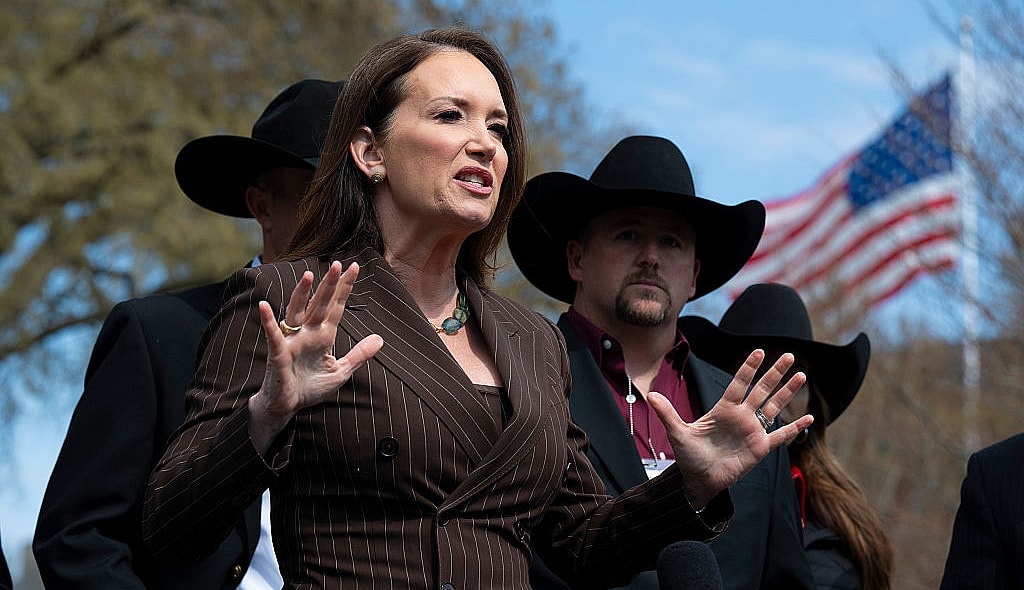
U.S. Secretary Brooke Rollins evoked the Civil Rights Movement of the 1960s when describing the changes the Trump administration is making at the U.S. Department of Agriculture.
To date, the USDA has sought to crack down on alleged fraud while establishing new eligibility requirements and restrictions for recipients of its services, notably SNAP (Supplemental Nutrition Assistance Program) and WIC (Supplemental Nutrition Program for Women, Infants, and Children). Most recently, the Trump administration unveiled a new rule requiring grocery retailers to increase the amount of healthy foods on their shelves to continue receiving federal funds.
During a recent interview with Newsmax, Secretary Rollins described the issue of access to healthy food as the “civil rights issue of our time.” The Trump official shared that she discussed the topic with Alveda King, the conservative niece of Dr. Martin Luther King Jr., who has supported President Donald Trump since his 2016 presidential campaign.
“The civil rights issue of our time is not having the healthy food…the health that’s needed to really live the American Dream, like Dr. [Martin Luther] King mentioned back in the ’60s. And I think that could be right. So we’re changing the stocking standards. We’re requiring the retailers who take SNAP to double the amount of healthy food that they offer. We’re moving the fraudsters out of SNAP. We’re shrinking the program to only focus on those who need it the most,” explained Rollins, who made major cuts to USDA programs that Black farmers critically relied on.
But critics of the Trump administration say there is an irony in Rollins’s pronouncement that access to healthy foods is as critical as voting rights and equal protection against racial discrimination were for African Americans during the Jim Crow era. The administration’s cuts to funding — touted as part of its mission to eliminate fraud and waste — are also cutting off lifelines for millions of Americans who rely on the federal government to eat.
“Secretary Rollins calling nutrition the ‘civil rights issue of our times’ would be laughable if it wasn’t so dangerous. Civil rights are about ensuring people can live with dignity. This regime just pushed the largest SNAP cut in history while claiming to address a nutrition crisis,” Nadine Smith, president and CEO of Color Of Change, told theGrio.
President Trump’s signature tax and spending law, the One, Big, Beautiful Bill Act (OBBBA) made historic cuts to SNAP benefits ($187 billion over 10 years), which more than 11 million Black Americans receive each month. The Republican-passed law also expanded work requirements and limits to eligibility for certain recipients based on age and whether or not they are deemed able-bodied, though advocates note that other factors prevent people from working such as instability caused by homelessness and those in foster care.

Ironically, the OBBBA eliminates several categories of exemptions, including for people who are veterans, who have aged out of foster care, who are experiencing homelessness, and who are living in areas with limited job openings, according to an analysis by the Urban Institute.
The Trump administration has also sought to use USDA services to pressure states to comply with its political agenda, including threatening to witthold funds for school lunch from school districts or states that support LGBTQ+ or immigrant communities.
“Slashing the programs that help people eat or threatening access to food for schools that support the civil rights of transgender students is not about nutrition or justice — it is about control, plain and simple,” said Smith.
There are other significant cuts like restrictions to the USDA’s ability to increase benefits above inflation. And according to the Center on Budget and Policy Priorities, Trump’s 2026 budget sharply reduces access to fruit and vegetables under WIC’s food benefits for new and expecting parents and young children. The think tank estimated a cut of $1.3 billion, impacting more than 5 million recipients. Another $1 billion was cut from programs that allowed schools and food banks to buy fresh produce directly from local farmers.
“What [the USDA] did was dismantle access to basic food, necessities for people who are living at or below the poverty line, the majority of which are seniors, disabled people and young children,” said Democratic strategist Ameshia Cross.
Cross decried Secretary Rollins previously trying to convince Americans that they could survive on $3 a meal, which included “a piece of chicken, a piece of brocolli [and] a corn tortilla.”
“Secretary Rollins was absolutely fine telling people who were crying out about affordability of regular groceries just a month and a half ago that basically they just need to eat less,” she recalled. “Calling this a civil rights issue, meanwhile taking food away from the disabled, from people who have young children, from folks who are, you know, episodically out of work in a nature of under employment and unemployment reigning supreme…I don’t buy it.”
Derrick Johnson, president and CEO of the NAACP, said Rollins’s statement was “rich” coming from “an administration that has jacked up costs and cut food aid for millions of people.”
“But how could we expect more from Trump — an out-of-touch billionaire who never sets foot in a grocery store — or anyone else in his administration? Trump is coming for our voting rights, has repealed decades-old civil rights protections, has attacked Black leaders and fired countless Black women from his administration, and even wants to cut food aid to hungry Americans, including children,” Johnson said in a statement provided to theGrio.
Noting the OBBBA’s major tax cuts that experts say largely benefit the rich and corporations, the civil rights leader added, “All because he wants to concentrate wealth and power into the hands of the very few. This president is clearly unwell and unfit.”
Cross said she believes Secretary Rollins is just trying to “lessen the blow for the midterms that are coming up,” as Republicans could see major losses in the November elections as Trump’s approval ratings continue to tank.
“She’s trying to throw a bone to messaging for some of the Republicans who are running in very tough districts,” she told theGrio. “But if it is sheerly the civil rights issue of our time, which I do think hunger, housing, employment, education, are all civil rights issues of our time, what I know was that this Republican Party, through its support of the Big, Beautiful Bill Act, through its reductions in SNAP, through its pushes against allowing for an expanding student access to college and affordability, they don’t care.”
