
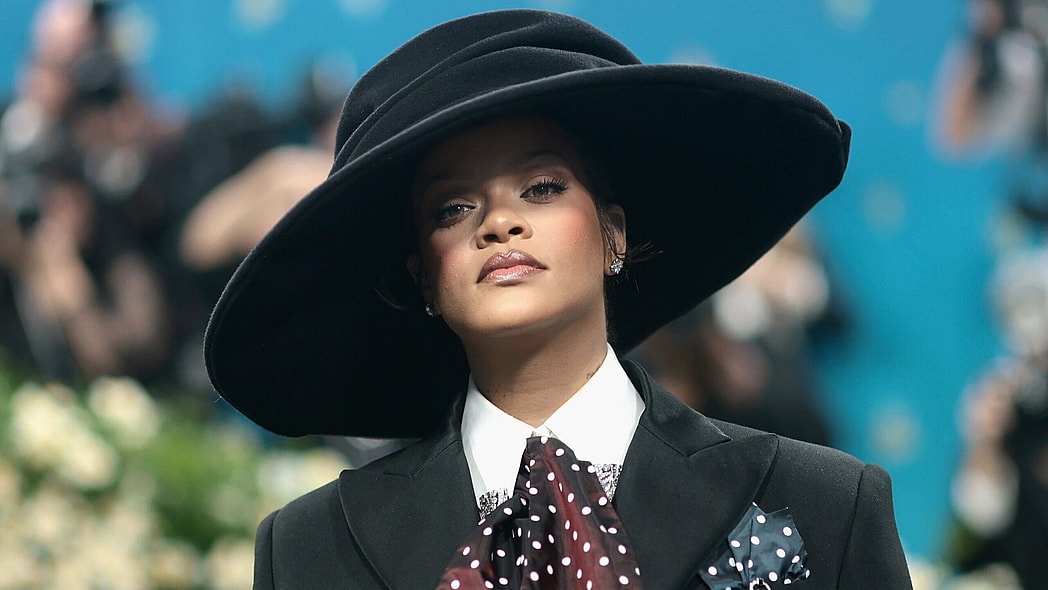
Rihanna’s daughter isn’t even one, and she’s already out in Paris sporting Dior.
In some of the first images of the 37-year-old music mogul since she fled her home in Los Angeles following a shooting in March, she was spotted out and about in Paris with her baby daughter, Rocki Irish, in tow, dressed nearly head-to-toe in pieces from the legacy French fashion house.
While Page Six nabbed the photos of the mom of three carrying the fashionable infant she shares with her partner A$AP Rocky (along with their two sons), The Cut confirmed the baby’s drip. She’s not just wearing Dior, she’s wearing vintage Dior. In the photos, she’s seen wearing a blue and green knit cap with a pom-pom mohawk, designed by John Galliano in 2002 (or, as The Cut admits, possibly based on, meaning this baby has a custom), which was styled with a gray plaid Dior dress with pleats worn over denim, and by the time the paparazzi got to them she had adorably lost one of her little tennis shoes.
For fans of Rihanna’s style and who have taken note of her penchant for wearing Dior and dressing her sons in it like she did for the “Smurfs” movie premiere, this development is hardly surprising. But there’s another reason why this sighting isn’t a huge surprise either.
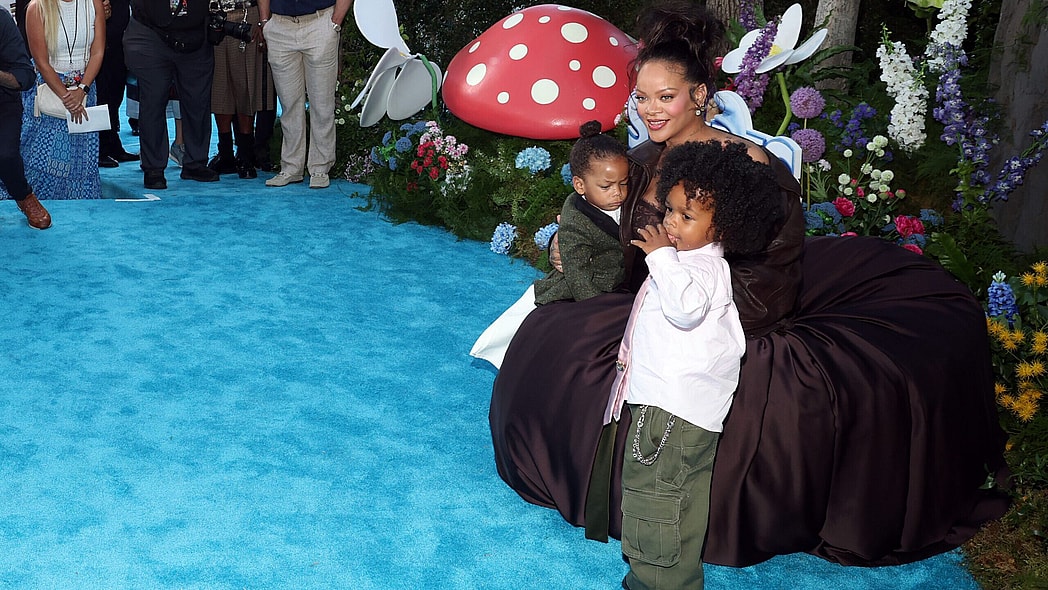
The reveal of Rocki is, well, for one, comforting for fans who have been worried about the pop star and her family since they fled Los Angeles, but it also reflects a new kind of inheritance taking hold. From Beyoncé to Cardi B to various “Real Housewives of Atlanta” stars to Serena Williams and more, Black celebrity moms aren’t just passing down wealth and wisdom—they’re establishing a luxury birthright, raising children in the exclusive, stylish worlds they themselves once had to fight to touch.
There was a time not too long ago when major fashion houses were reluctant to dress Black celebrities, and magazine covers featuring Black women were treated as a serious risk. That resistance played a role in shaping who was aligned with luxury. Oprah Winfrey was famously denied entry to a Hermès store in Paris and, nearly a decade later, barred from purchasing a bag fetching a high price in Switzerland. We all remember a time when Beyoncé, Kelly Rowland, and Michelle Williams were seen as too new and too urban for legacy designers to dress during the Destiny’s Child days. And part of the secret sauce in Law Roach’s epic fashion story with Zendaya is that he had to purchase many of the pieces she initially wore outright because certain designers wouldn’t let them borrow the styles.
The examples abound. But women like Oprah, Beyoncé, Zendaya, and Rihanna began to stretch imaginations, while figures like the former First Lady Michelle Obama and Meghan Markle pushed it even further into legacy institutions like the White House and the Royal Family, respectively, placing Black motherhood and Black children in direct proximity to spaces historically defined by our exclusion.
There hasn’t just been an increase in Black wealth, but the normalization of Black access to it. Children like Rocki, alongside kids like Kulture, North West, and Blue Ivy Carter, are being introduced to these spaces casually from day one and without explanation. They are not being positioned as newcomers or even exceptions.
Beyond celebrity mothers, there’s a tangible shift in how Black mothers are thinking about what they want their children to experience. The emphasis on “soft life,” curated experiences, and early exposure to beauty, travel, and self-care reflects a broader desire to replace the survival mindset of previous generations with some ease. Social media is awash with content displaying elaborate curated experiences, “my baby’s first coach” reveals, decadent dorm room makeovers befitting of an AD spread, and the like. It’s less about extravagance and more about intention, about raising children who expect to be seen, valued, comfortable, and well-positioned. Ease is being treated as something to pass down, not hope for.
For generations, Black culture built luxury without having any access to it for themselves. What we’re seeing now is a mild adjustment. Children like Rocki aren’t arriving in these spaces—they’re starting there.
