
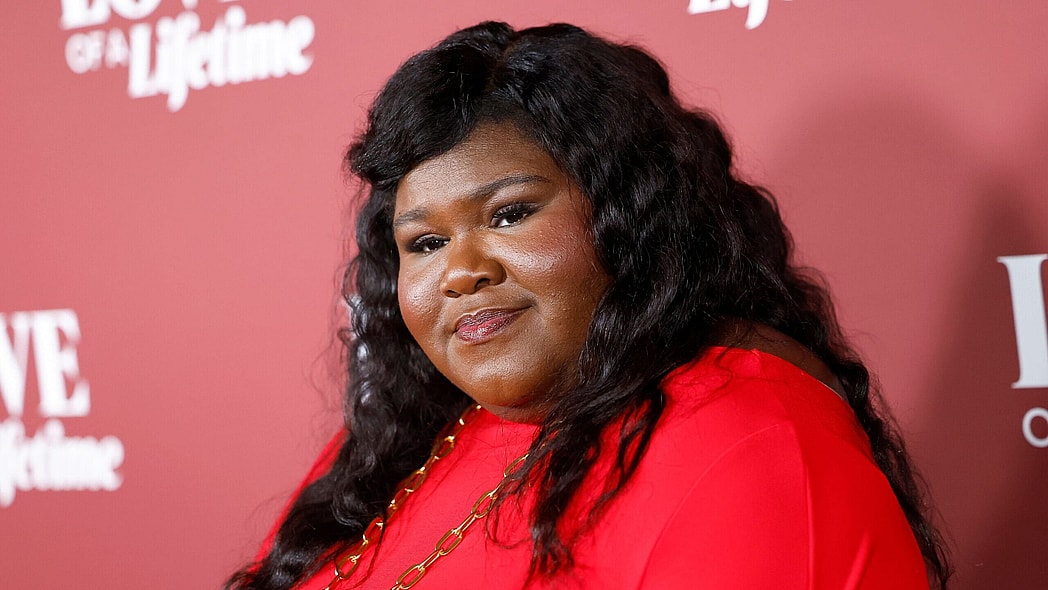
In a moment that felt like déjà vu, because just last week Coco Gauff was talking down detractors of her natural hair, Gabourey Sidibe found herself doing the same, only about her two-year-old twin toddlers.
“If you comment, telling me to do my toddlers hair, I’m blocking you,” the 42-year-old actress began in a post on Threads, as theGrio previously reported.
She explained that the hair of her toddlers, Cooper and Maya, whom she shares with her husband, Brandon Frankel, does get brushed, and her daughter often wears braids, but they are children who romp. After a full day, or even five minutes, their hair becomes unruly. By the time a photo is snapped or a video is captured, no one has the time or energy to stop and restyle. This isn’t an episode of “The Real Housewives.”
Sidibe is a Hollywood actress, fully aware of image, glam, and the power of presentation. It is not unreasonable to assume she knows how to get her children together when it matters. But that’s exactly the point.
“I don’t immediately rebraid it because I didn’t have kids for the (a)esthetic,” she said.
Her content, where her children appear as they actually are, smiling wide, hair free, pajamas wrinkled, bodies in motion and uncontained, is a work of what the internet has started to call “deinfluencing.”
Whereas influencing is polished, highly styled, curated, and usually posted with a clear aim, deinfluencing is the exact opposite. Messy and cluttered bathroom countertops in “get ready with mes.” Unmade beds in the backgrounds of mirror selfies. Videos that start with “let me de-influence you” before cutting to the chaos of toddlers screaming and crying. Random photo dumps filled with unfiltered, unedited, weirdly angled random shots. Life as it is, not as it is often performed to be. And it’s the kind of content we’re going to start to see more of.
Research into the trend published earlier this year found it stems from desire, as there’s growing fatigue with hyper-curated content, especially as companies, brands, and celebrities, to some extent, adopted influencer-style marketing en masse to move away from that ecosystem. Add in the rise of AI-generated content, where folks aren’t even wearing or doing the things they are influencing us to anymore, and imperfection, any at all, becomes proof of life, that there’s a real person trying to connect.
However, for Black women, and especially Black mothers, that kind of authenticity comes with risk. Motherhood is policed. Black motherhood even more so. Black hair, maybe even increasingly so. So when Sidibe, or other Black mothers, post their children as they are, not styled for public consumption but for their actual lives, what is seen as “relatable” for others can read as “neglect” for them. The standards double right along with the scrutiny. But that doesn’t mean the response has to be to conform and perform perfectly. If anything, it makes the case for why we need even more of this, not less.
Gabrielle Union has long been doing this in her own way as well, whether through the now-viral “Shady Baby” meme-turned-book-series with her daughter Kaavia or by consistently showing both her own hair and her daughter’s hair in all its stages.
We can’t ask for authenticity and then punish it when it shows up. We can’t demand real life and then reject it when it isn’t hitting some aesthetic ideal. And we cannot keep forcing Black children into boxes, especially when it comes to their hair. We should be able to wear our hair as it grows out of our heads. Our protective styles, which date back centuries, deserve not just trendy, fleeting admiration but real respect, and from us most of all.
So, we should get used to seeing more Black children with messy heads. Not because something is wrong or someone is being neglectful, but because someone is being honest.
