
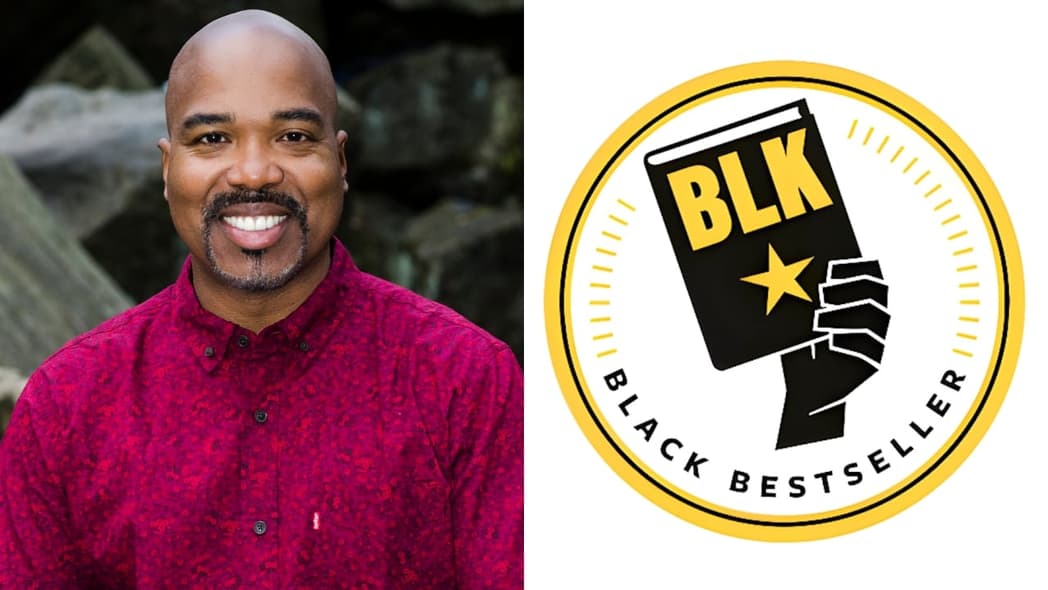
Troy Johnson has been fighting for Black books since before most people knew what a website was.
In 1997, the Harlem-raised entrepreneur sat down to teach himself e-commerce and ended up building something far more enduring, the African American Literature Book Club, better known as AALBC, now one of the most trusted independent platforms for Black literature on the internet. Nearly three decades later, Johnson is still coding, still curating his custom website, and still refusing to let the algorithm decide which Black stories get told.
Now, he’s bringing that mission to a new audience at TheGrio. TheGrio has partnered with AALBC and the BLK Bestsellers List, a data-driven monthly ranking of the top-selling books by Black authors, to give those titles and the writers behind them a bigger stage. It’s a partnership rooted in a shared belief that Black books don’t have a demand problem. They have a visibility problem, and Black people can build their own platforms to amplify our stories.
Johnson sat down with theGrio’s Chief Content Officer, Natasha S. Alford, to talk about the structural barriers Black authors still face, what the most successful books on the BLK list have in common, and why, after 30 years, he’s still fighting for Black books to get the love they deserve.
The following interview has been edited for length and clarity.
Natasha: Troy, could you speak to some of the challenges that you have observed that Black authors face today?
Troy: Visibility has always been a challenge, but there are things within the industry that structurally, that make it harder for Black books to be seen. When I created my website, there were book sites that I aspired to be like. Those sites are all gone. I’ll make a bold statement and say I think my site is the only one that’s custom-built. Pretty much all the other book websites are templates. As a result, you know it’s harder for books to be covered because there’s just not the variety of websites that existed in the past.
The nature of the way we use the web has changed because it’s controlled by a handful of sites. To many people, the World Wide Web is Amazon and a couple of social media sites. It’s shrinking because the big multinational conglomerates have swept all the way out of the room. That makes it harder for a variety of books to be seen. And it seems that though many of us have abandoned some of the traditional means of getting the word out about books that still works.
My newsletter is the same newsletter that I was using in 1998, and it still works just as effectively. Even creators are producing on the social platform as opposed to their own platform. Because of that, everything is on the platform, and the algorithm is optimized to enhance engagement. So a lot of the content that I create is not scandalous, it is not salacious, and it’s not celebrity-driven, typically. So as a result, it’s not gonna feed the algorithm.
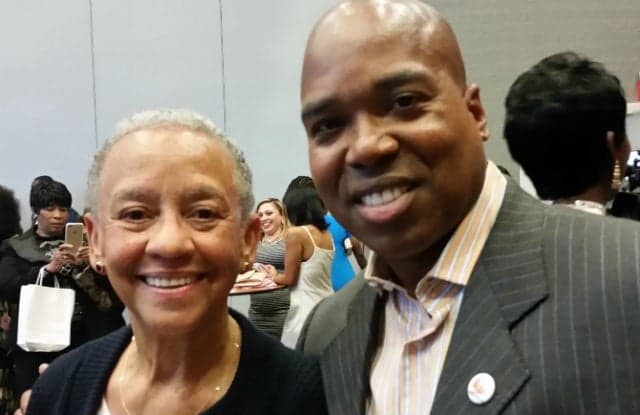
So, the challenge for books is how do you fight the algorithm? How do you reach an audience that’s increasingly under the control of a handful of sites? That’s the challenge, at least for book discovery. And I think that’s the power behind the BLK list.
I’m really excited about, you know, our partnership. But I’ve talked to authors, you know, one in particular said, ‘Hey, I’m selling a lot of books, but I’m on nobody’s bestsellers list.’ Despite that, it’s still making it, but it could do so much better if others knew about it. When I share the list with people in the industry, they’re like, ‘Oh, I never heard of this author. I never heard of this book.’ It’s the same thing with me. I discover books every month that I just didn’t know about. So it’s a great tool for booksellers and anybody interested in finding new books.
Natasha: I look at your list, and it fills me with hope, both as a journalist and also an author. It’s a reminder that people do read books and they do show up. What would you say to authors to inspire or encourage them in terms of their craft?
Troy: Try to create the best book that you can. There are things that authors need to do, obviously, study their craft. There are more books being created in the last five years than when I first started. I would be twirling my thumbs waiting for the next black book to come out. This was before the technology existed for people to produce their own books inexpensively and easily. So, there just wasn’t a lot of books coming out. Now I can’t keep track of all of them, all the print-on-demand and self-published books.
One of the things that’s important for authors to recognize is to have your book edited. Hire a professional designer. There are a lot books being produced by AI, being sold on Amazon, and not disclosed. There’s all kinds of things happening that we still need to have the human involved in creating this stuff. Because once the human is out, the picture, then it’s a whole other thing…
Natasha: Absolutely. You’re in the thick of things with the BLK Bestsellers List and seeing which books have stayed at the top, and which ones resonate with audiences. What do you think? Is there a unifying theme across which ones do well?
Troy: A book like James by Percival Everett– it’s probably one of the top-selling books that I’ve been able to track. It’s one of top-selling novels during that period. But it also sat on the New York Times list for months and months. Those books will always reach an audience because they’re just excellent books.
But there are others. There are books like Sadeqa Johnson’s book, “Keeper of the Lost Children”- excellent books. Sebo Campbell’s book “Sky Full of Elephants,” which our club just read. It’s gotten some coverage, but I don’t think it hit the Times list. I’m not sure if it hit anybody’s list, but it’s a tremendous novel, really smart. I thought it was a profound read.
On the nonfiction side, there was a book by an author I was previously unfamiliar with, Kimberly D. Moore. There’s a study guide for the Bible- it’s one of the top-selling books by a Black writer in the country. It’s been on a list pretty much every month that I’ve been producing the list.
On the poetry side, there’s a brother named R.H. Sin, again someone else I’ve never heard of, but he’s got a number of books that have hit the list. There’s an idea that poetry doesn’t sell or doesn’t sell as well. It probably would sell more if people were just aware of some of the authors who are doing well.
Then you have classic authors like Sharon Draper, whose middle-grade novel, “Out of My Mind.” It’s been doing really well. So in terms of what, I think, I don’t think there’s a single formula. On the major lists, celebrity memoir is going to hit the big list… folks like Michelle Obama, her memoir, Beyonce’s mom had a memoir, those books are going to hit the list because they’re well-known and they’re celebrities.
But for the lists like BLK lists, I think there’s no one formula other than something that’s well-written. Something that’s produced well and is resonating well enough.
Check theGrio’s Book Club section to learn which books have topped the BLK Bestsellers List monthly and follow us at @theGrio on Instagram for more interview clips and special segments with Black authors!
