
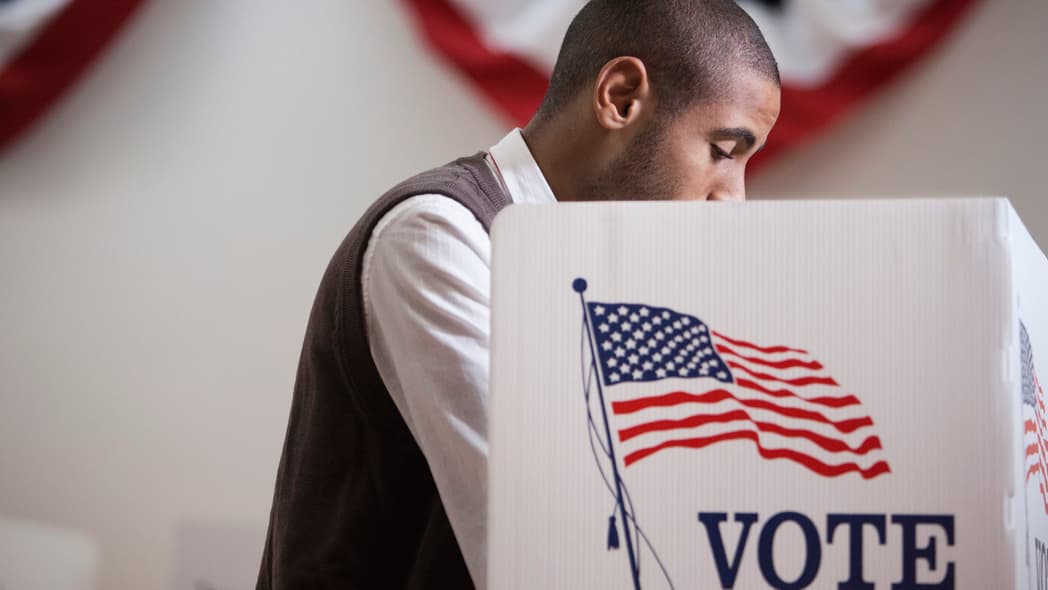
A new poll of Black men reveals that a quarter of younger Black men are not committed to voting in the upcoming midterm elections this November, even as Black communities disproportionately suffer the most amid a national affordability crisis and rollbacks in voting rights protections after the gutting of the Voting Rights Act.
The Black Men Vote survey of more than 1,600 Black men ages 18-45, conducted by HIT Strategies, found that in key states — Georgia, Michigan, Mississippi, North Carolina, Pennsylvania, and South Carolina — one in four young Black men, or 26%, are either uncertain or unlikely to participate in the midterms. This includes Black men who voted for Kamala Harris in 2024.
Black Men Vote says the finding creates both “risk and opportunity” in closely contested states that will determine the balance of power in Congress and thereby drive the future of policy for the next two years of Donald Trump‘s presidency at a time of economic and political crisis for Black Americans.
The outcome of the 2026 election could not be more critical for Black men. According to the latest jobs report released by the U.S. Bureau of Labor Statistics, Black men have the highest unemployment rate (6.9%) of any racial/ethnic or gender group, outside of the unemployment rates for youth populations.
The Black Men Vote survey points out that the challenge of turning out Black men to the polls in November extends beyond apathy, noting that 92% of them say voting is important, “showing a gap between civic belief and likely midterm participation.” And while a majority of Black men lean toward the Democratic Party, identifying with a “left of center” ideology, a “meaningful” number of them identify as Independent or Republicans. However, a majority of those who identify as Republican cite conservative “family values” versus being a part of MAGA.
Understanding the political views and motivations of Black men, and how to reach them, is critical for political parties aiming to earn their support, the survey notes.
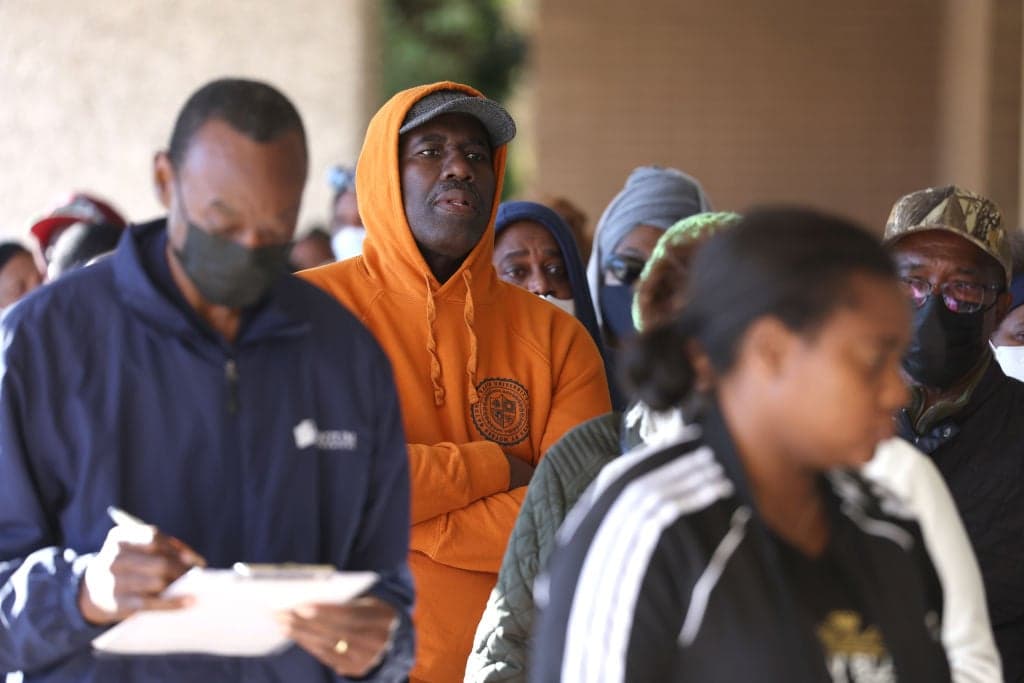
“Black men are not politically absent, they are politically misread,” said Michael Bland, Executive Director of Black Men Vote. “This research shows that young Black men remain broadly left-of-center, but they do not fit neatly into the political boxes and campaign assumptions that too often define them.”
Bland explained, “They value voting, but one in four are not yet committed to participating in 2026. That should be a wake-up call: Black men are not a problem to be solved or a bloc to be chased in the final weeks of an election. They are a decisive electorate that has to be respected, understood, and engaged year-round.”
Reaching young Black voters will require meeting them where they are, including non-traditional spaces. The survey finds that 90% of younger Black men use YouTube at least multiple times a week, and a majority identify YouTube as a place they go for breaking political news.
Concerns over Black male turnout date back to previous election cycles, most notably the 2024 presidential election, where Trump saw significant gains among young Black and Hispanic men.
Democratic strategist Michael Hardaway, who served as a communications director for Congressman Hakeem Jeffries and worked on Barack Obama’s 2008 presidential campaign, tells theGrio there’s been a “severe neglect” of Black men.
“Neither party has done a good job of engaging Black men in a meaningful way,” he argued. Hardaway said there’s an “assumption” that Black men will always vote in elections.
“There’s no other group that faces that level of disrespect and indifference,” the Democratic operative told theGrio. “If you want Black men to vote, that means investing time over years and engaging with them in a meaningful way.”
Hardaway says that is how Obama won his election, explaining, “He engaged with Black men and created organizations that supported them, like My Brother’s Keeper and others.”
Hardaway expressed frustration with Democrats, who “constantly chase this white whale of suburban white moms,” including investing millions of dollars. “They never actually win the group,” he said. “Meanwhile, you have Black people, especially Black men, who are here on the other side, and they’re being neglected, and the only message there is you better come out.”
