
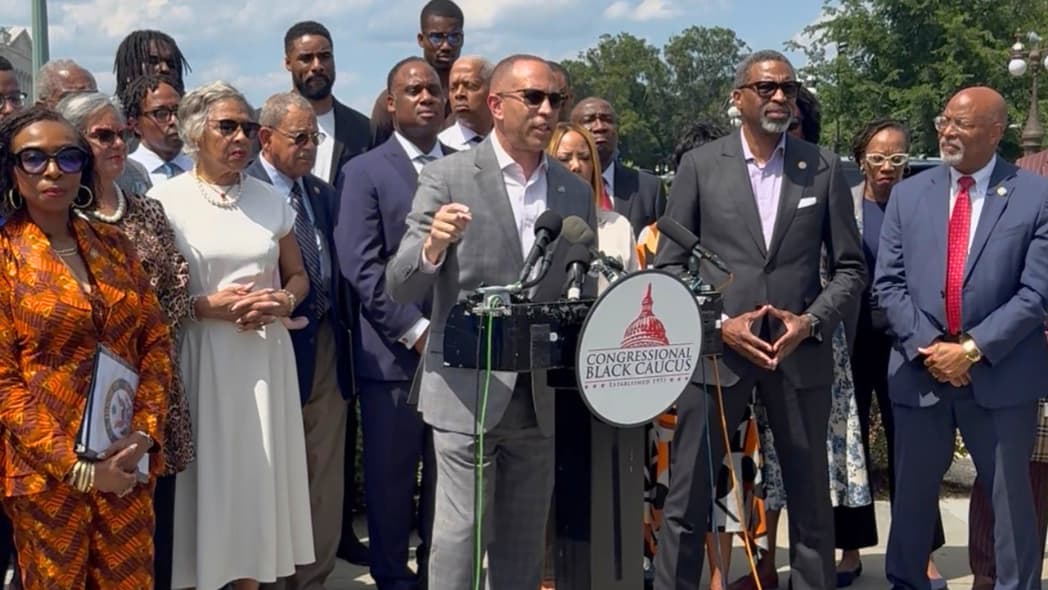
The Congressional Black Caucus (CBC), enraged by the Supreme Court’s gutting of the Voting Rights Act and subsequent Southern states’ elimination of Black representation, joined the NAACP’s call to boycott athletic programs at public universities, demanding that institutions that remained silent in the face of attacks on Black political power speak up or suffer economic consequences.
“This is an unprecedented moment featuring an unprecedented attack on Black political representation, and therefore, it requires an unprecedented response,” said U.S. Rep. Hakeem Jeffries, D-N.Y., the Democratic leader of the U.S. House of Representatives.
Congressman Jeffries joined dozens of CBC members at a Tuesday press conference on Capitol Hill to co-sign the NAACP’s boycott, which calls on Black athletes and fans to divest their dollars from public state universities within the NCAA Southeastern Conference.
The boycott, dubbed the “Out of Bounds” campaign, also urges incoming college athletes not to attend any university in a Southern state that has not publicly condemned the wave of racially gerrymandered congressional maps that carve out majority-Black districts to obtain political advantages for the Republican Party in November’s midterm elections.
Jeffries slammed southern states like Louisiana, Alabama, Tennessee, Georgia, and Florida, which he said “unleashed these Jim Crow-like, racially oppressive tactics,” calling it “unacceptable, unconscionable, and un-American.”
“We believe that the silence of these institutions is complicity, and we will not stand for it,” said the New York leader who is poised to become the first African-American U.S. House speaker should Democrats win the majority in November by overcoming the gerrymandering battle waged by President Donald Trump and Republicans.
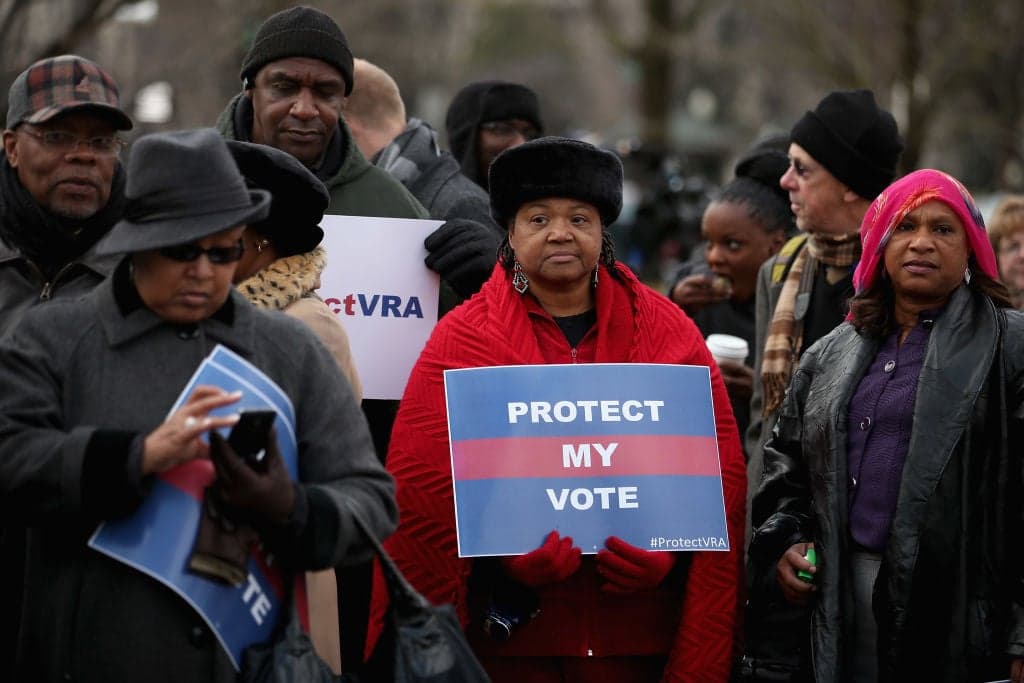
The CBC also unanimously opposed supporting the SCORE Act, which would regulate name, image, and likeness (NIL) compensation for universities and students, given the Black voting rights issue.
“The success, visibility, and cultural influence of major athletic conferences and institutions are inseparable from the talent, labor, leadership and cultural contributions of Black communities,” CBC Chairwoman U.S. Rep. Yvette D. Clarke, D-N.Y., said at Tuesday’s press conference.
Clarke added, “Black political representation is not a side issue, and this is not politics as usual. This is a defining moral moment for our country. The Congressional Black Caucus cannot support legislation benefiting major athletic institutions that continue to remain silent while Black voting rights and Black political power are being systematically dismantled across the South.”
NAACP President Derrick Johnson told theGrio that the nation’s oldest civil rights group launched the college sports boycott after the success of other campaigns, like the Target boycott, in response to the corporation’s rollback of DEI policies pushed by the Trump administration.
The civil rights leader said there’s also a historic precedent that should not be lost in this moment.
“There was a time where Ole Miss would fly a Confederate flag in that stadium until in the late 1990s. There was a player who said I can no longer play for a school that waved the Confederate flag. Within two months, the state of Mississippi and Ole Miss took down the flag,” said Johnsn. “The power of our athletes is something that has not been appreciated in recent times, but if you think about the history of the civil rights movement, we’ve always had athletes to stand up, whether it was Jim Brown, Kareem Abdul [Jabbar], [or] Muhammad Ali.”
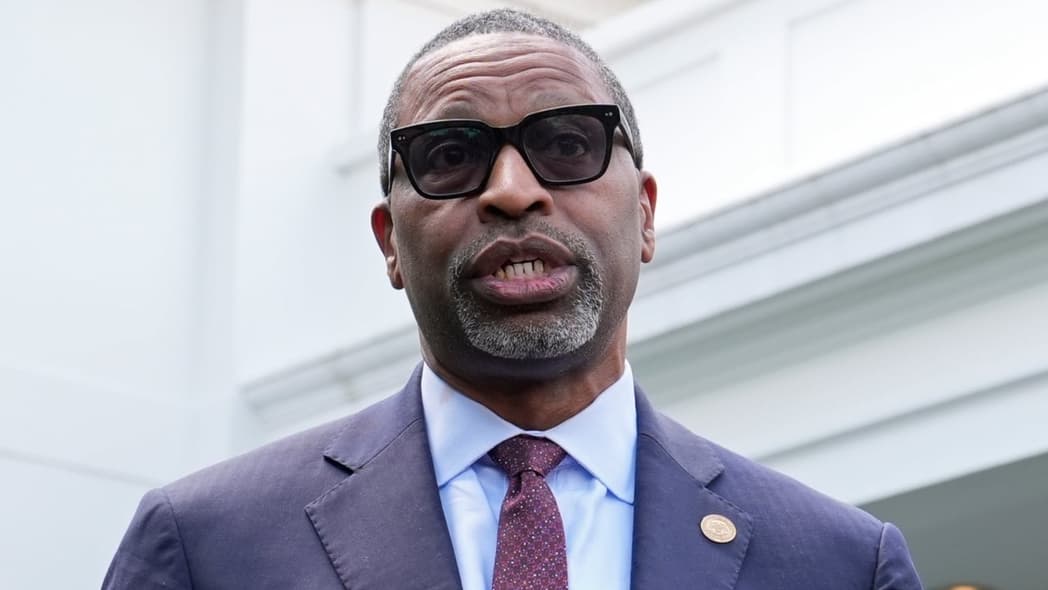
after meeting with President Joe Biden. The leading civil rights organization said it hopes to raise $15 million for its Building Community Voice Fund. (Photo: Susan Walsh/AP)
He told theGrio, “Today it is important not only for those young athletes to stand up, but the parents of those athletes understand what impact they could have…those parents also must understand that the denial of representation is also a form of exploitation, and their children and those families have decisions to make, and those decisions can be and should be not to play for any state school that would deny representation.”
U.S. Rep. Maxine Waters, D-Calif., told theGrio there should be “big time” economic implications for public universities and other institutions that do not speak up for Black voters and against racial injustice. The popular 87-year-old congresswoman recalled the Black Lives Matter protests of former NFL quarterback Colin Kaepernick.
“Kaepernick, who took a knee, talking about injustice in national football…He didn’t get the support that he needed at the time. But I and others are not only willing to take a knee, I’m willing to give a life,” said Waters.
The CBC’s standing in solidarity with the NAACP’s college sports boycott is a new escalation in the broader fight to protect the voting rights of Black Americans. The historic and influential caucus of more than 60 stands to lose several members should southern states succeed in drawing Black voters out of political power, and thereby casting out the Black lawmakers who represent them in Congress. The group of lawmakers says that while Black communities may seem defeated in the current political climate, they will continue to fight for justice by any means necessary.
“The silence from our institutions in moments of injustice carries consequences,” said Leader Jeffries. “We are calling on American institutions to stand with us, meet this moment with courage, clarity, and conviction. History will remember who chose to stand for democracy and equal representation and who chose silence.
