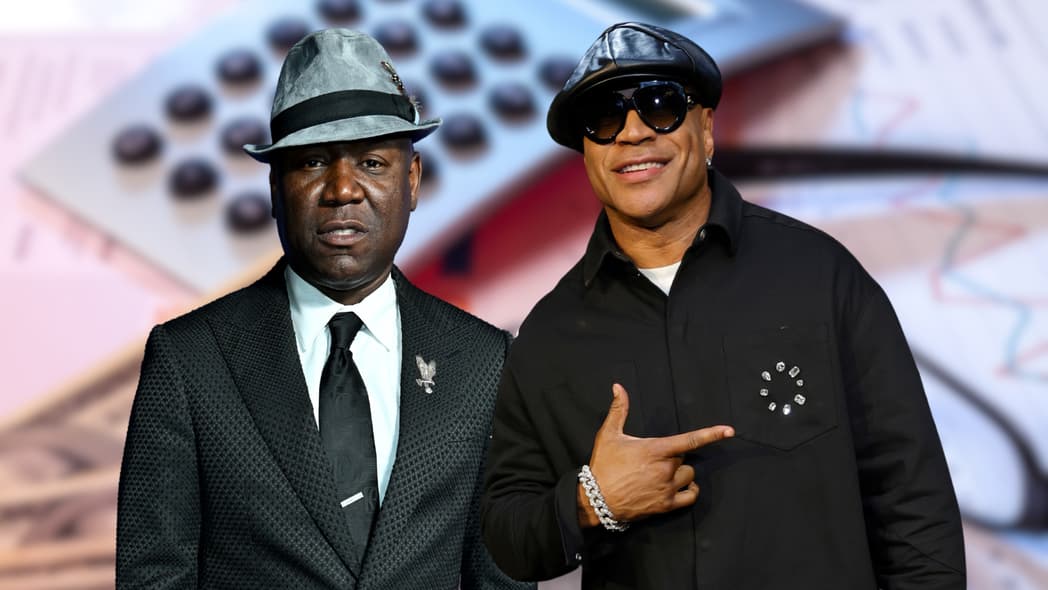
Two men who built their names, one through landmark civil rights cases and the other through decades in hip-hop, are now turning their attention to the financial system.
Ben Crump, the civil rights attorney and co-founder of DreamFi, has partnered with rap legend LL COOL J to bring the fintech platform to unbanked and underbanked Americans. Their pitch is simple: you don’t need to be wealthy to start building wealth.
“It is not for the elites, it’s not for those who have all the money in the world. It is for that everyday person with $10, $20, $30, $40, all of that matters,” LL told TheGrio.
The wealth gap they aim to address has long affected people of color disproportionately compared with their white counterparts. Limited access to traditional banking services continues to affect millions of unbanked and underbanked Americans.
According to a 2023 national survey by the Federal Deposit Insurance Corporation, 4.2% of U.S. households, about 5.6 million people, were unbanked, meaning no one in the household had a checking or savings account at a bank or credit union. In the same year, around 14.2% of U.S. households, about 19.0 million people, were considered underbanked. The findings point to enduring challenges in financial inclusion nationwide.
“In most communities of color, we have the unbanked and the underbanked members of our community that are still out there in those check-cashing lines around the corner because they don’t have bank accounts and they are literally paying 10, 15, 20%, sometimes 25% of their hard-earned check just to be able to cash it,” Crump said.
Both men root this work in family memory. For LL, it starts with his grandfather, a man who shined shoes, handled baggage at John F. Kennedy International Airport, worked the post office, and still came home to fix his own car to save money, all while pursuing an engineering degree.
“I learned how important it is to keep going. I learned that dreams don’t have deadlines,” LL said.
Observing his grandfather ultimately changed his mindset. The Queens native, born Todd Smith, said his grandparents have always shared words of wisdom that he lives by today.
LL stated that he could only imagine what life would have been like if his grandparents and his mom had access to financial services like the platform.
Crump also drew from similar sentiments: “I can only think what my beautiful Black mother would have been able to accomplish had she had the benefit of financial literacy,” he said. “God blessed me to be very successful, more successful than anybody in my family ever dreamed of, and what we have to do now is make room for other people at the table.”
While reflecting on his partnership with DreamFi, LL opened up about the financial mistakes he made in his life and how he could help communities lacking these resources by promoting financial literacy through the platform.
“When Ben founded the company and asked me to come on as a partner, be a part of what he was doing and support what he was doing, it [felt, to me,] really natural because I made so many financial mistakes as a little kid, getting into music early and buying every gold chain I could find and every car I could drive. So this felt [right] to me,” he said.
Financial literacy and money management are often not taught early enough. According to DreamFi’s Access and Equity Study, more than half of respondents (56%) said they rarely or never learned basic financial concepts such as budgeting in school. Additionally, many families do not teach financial literacy at home, widening gaps in financial education.
The study also found that more than half of Americans (54%) say they learned budgeting or financial planning from their parents or guardians. However, only 28% of parents and guardians say they feel confident teaching a child about financial literacy.
By race, about 79% of Black respondents sought out financial education, followed by 71% of Hispanic respondents and 69% of white respondents, per the study.
DreamFi is designed to meet people where they are, not where the traditional banking system expects them to be. It offers a debit card with direct deposit, credit monitoring, life insurance, affordable phone plans, roadside assistance, and financial literacy tools, all accessible through an app.
“You can have your money hit at 12 midnight, where you’re not having to wait in the check-cashing line. You can pay your bills to help build your credit,” Crump explained. “When your credit rating goes up, we tell you that you can afford to get a lower interest rate on your automobile, so that means you can save a little more money to put in a college fund for your children or save for a down payment for a home.”
LL framed the progression in more personal terms, showing how people can change their lives with the necessary mindset and tools to get started.
“First, learn how to swim. One day, you may have the boat. One day, you may have the life jacket. Learn how to swim, then move to the life jacket, then move to the surfboard, then move to the jet ski; there’s a progression that can take place here so that you can get your life together.”
DreamFi seeks to expand financial access and help Americans build long-term financial stability for future generations, according to its website.
For Crump, this is not just a business venture. He sees it as a continuation of the civil rights fight through financial empowerment. After suing major banks over discriminatory lending practices, he said he came to realize the courtroom alone is not enough.
“Economic access to capital is a civil right. Financial freedom is a civil right,” he said. “When you have financial freedom, it helps make all the other freedoms that much more obtainable.”
When asked how DreamFi could help move the needle where legislation and litigation have fallen short, he was equally direct about the current political climate.
“Right now, we know this government is not gonna save us. We have to look for ways to be self-sustaining,” Crump added.
Five years from now, both men measure success not in revenue but in changed lives; funerals people can afford, cars that get families to work, children with a head start.
“DreamFi is successful if our children have the benefit of having financial literacy — not just things, but a mentality that I understand I have to be disciplined, I have to be budgeted, and I have to have a plan on how I have financial freedom,” Crump said.
For LL, the real inheritance isn’t money, it’s mindset. He said, “passing on a mentality” and “passing on financial literacy” will create generational wealth. He also credits his grandparents and his partnership with DreamFi, saying he hopes to make a difference in communities that need it most.
“Instead of me just running around the country showing off and bragging about my wealth, I’m actually saying, you know what, I wanna redirect this and put this energy into something that’s gonna help the community,” LL said. “Dreams don’t have deadlines. Each one teach one.”
