
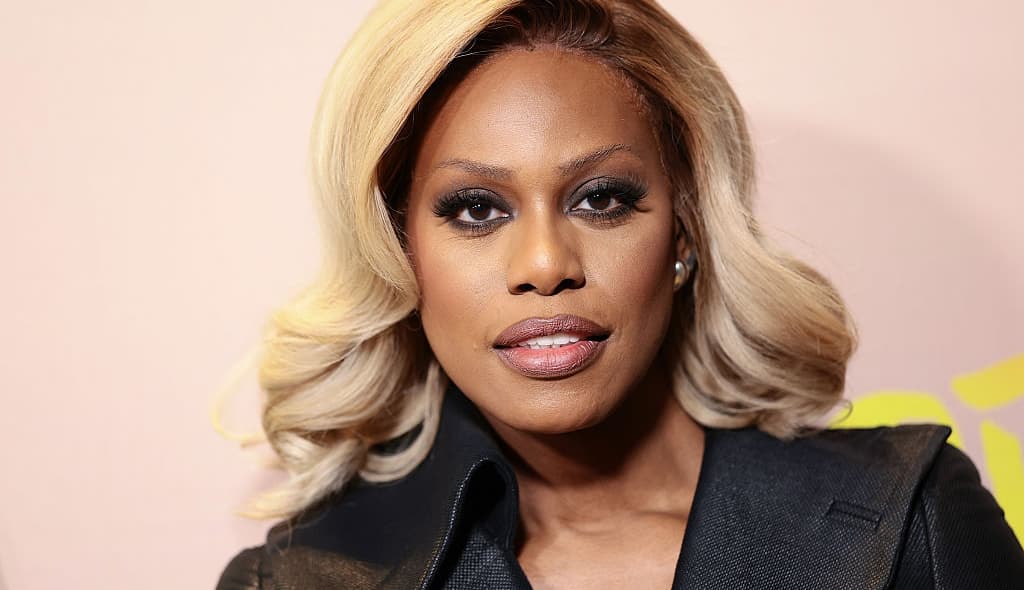
Laverne Cox shared a deeply traumatizing moment in her childhood where she was abandoned by her parents.
Ahead of the release of her memoir, “Transcendent,” the “Orange Is the New Black” star revealed in an interview with People that she and her twin brother, Lamar, were dropped off at an orphanage after her mother sent them to live with their estranged father.
As Cox, 53, tells it, she and her mother, Gloria, had a tense relationship. Her mother was raising twins by herself and worked multiple jobs to provide for them. Overwhelmed, she would often threaten to kick Cox and her brother out, and one day she did and dropped them off at their father’s home, to whom they had no prior relationship.
Cox’s father rejected them, calling them “f—-g freaks,” and his partner took them to a police station, where they would later be sent to an orphanage.
“To actually tell that orphanage story was triggering. It was re-traumatizing,” she told the publication. “I was just back there again.”
The Mobile, Ala.-born actress also pointed out that she and her mother remember the episode differently. Cox says she was at the orphanage for a month, and her mother claims it was one week.
“My mom’s version of things isn’t correct. It’s nice to have a twin brother I can check with and be like, ‘It was a month, right?’ And he’s like, ‘Yeah, it was definitely a month.”
The actress’s new offering will be another way she has dealt with the traumas of the past through her art. Her Amazon Prime sitcom “Clean Slate” told the story of a trans woman named Desiree (Cox) going back to Alabama to reconnect with her estranged father (George Wallace), her old friends, and community. Cox explained the difficulty of having to film certain scenes of the show, like being in church, or having Wallace play a character that was “eerily similar” to her real-life mother. But she knew the impact of making a show that hit close to home for her may do the same for others.
“If you do have lived experiences that are challenging, you can give it to your art,” she told People in 2025. “And then, maybe the people who are watching it, who may be experiencing the same thing, will understand they’re not alone. That cultivates empathy. And that is the gift of being an artist and going through horrible, awful stuff, is that maybe I can use this in my work, and show someone else that they’re not alone.”
