
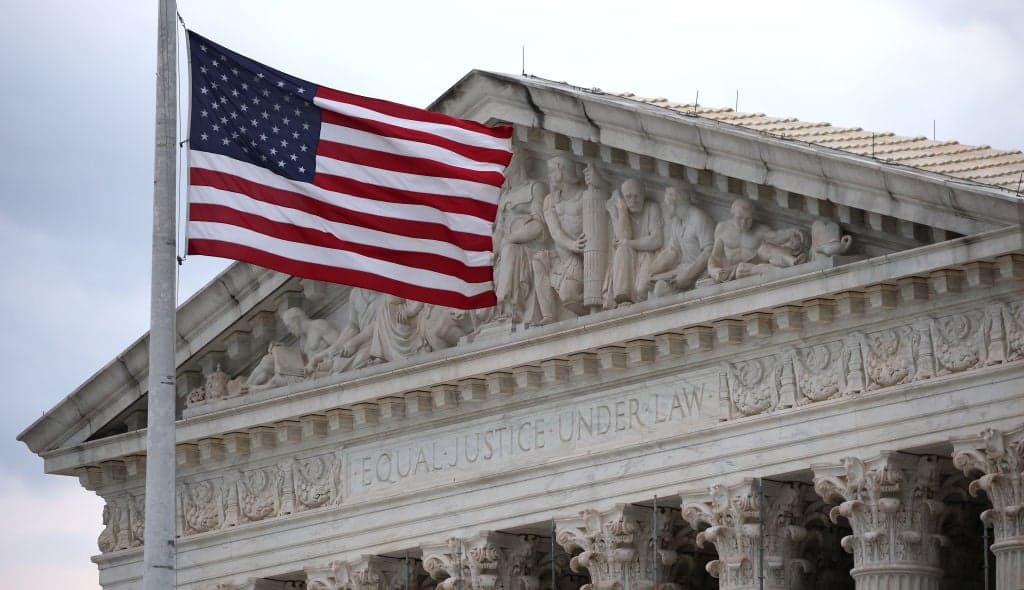
The U.S. Supreme Court ruled Thursday in favor of a Black Mississippi death row inmate who argued that racial bias tainted the jury selection process in his capital murder trial, according to the Associated Press.
In a narrow 5-4 decision, the justices sided with Terry Pitchford, who was sentenced to death in connection with the fatal shooting of grocery store owner Reuben Britt during a 2004 robbery in northern Mississippi.
Justice Brett Kavanaugh wrote the majority opinion, joined by Chief Justice John Roberts and the court’s three liberal justices. Kavanaugh said the jury selection process in Pitchford’s case “broke down,” citing possible confusion, oversight or a rushed process during trial proceedings.
Pitchford’s legal team argued that prosecutors improperly removed Black jurors from the panel. At the trial, the final jury consisted of 11 white jurors and one Black juror. The prosecutor in the case, Doug Evans, had previously faced scrutiny over discriminatory jury selection practices in other Mississippi cases.
The ruling revisits issues tied to the Supreme Court’s landmark 1986 decision in Batson v. Kentucky, which prohibits prosecutors from striking jurors solely because of race. Pitchford’s attorneys maintained that the trial judge failed to properly consider their objections to the removal of Black jurors.
Kavanaugh agreed, writing that Pitchford’s lawyers made the necessary legal arguments and that the Mississippi Supreme Court acted unreasonably when it rejected those claims.
The decision does not automatically overturn Pitchford’s conviction, but it sends the case back to lower courts for further proceedings. His attorney, Joseph Perkovich, said the ruling means Pitchford is now entitled to “a fair trial in the state court.”
Justice Neil Gorsuch dissented, joined by Justices Clarence Thomas, Samuel Alito and Amy Coney Barrett. Gorsuch argued that Pitchford had not met the high legal standard required to overturn the state court’s decision.
The case has drawn comparisons to the Supreme Court’s 2019 ruling in favor of Curtis Flowers, another Black Mississippi defendant whose conviction was overturned because prosecutors repeatedly excluded Black jurors. Doug Evans also prosecuted that case.
Pitchford, now 40, was 18 at the time of the robbery. Prosecutors said his younger accomplice fatally shot Britt during the crime. Because the shooter was under 18, he was not eligible for the death penalty, leaving Pitchford to face capital punishment.
The case has been moving through the courts for nearly two decades.
