
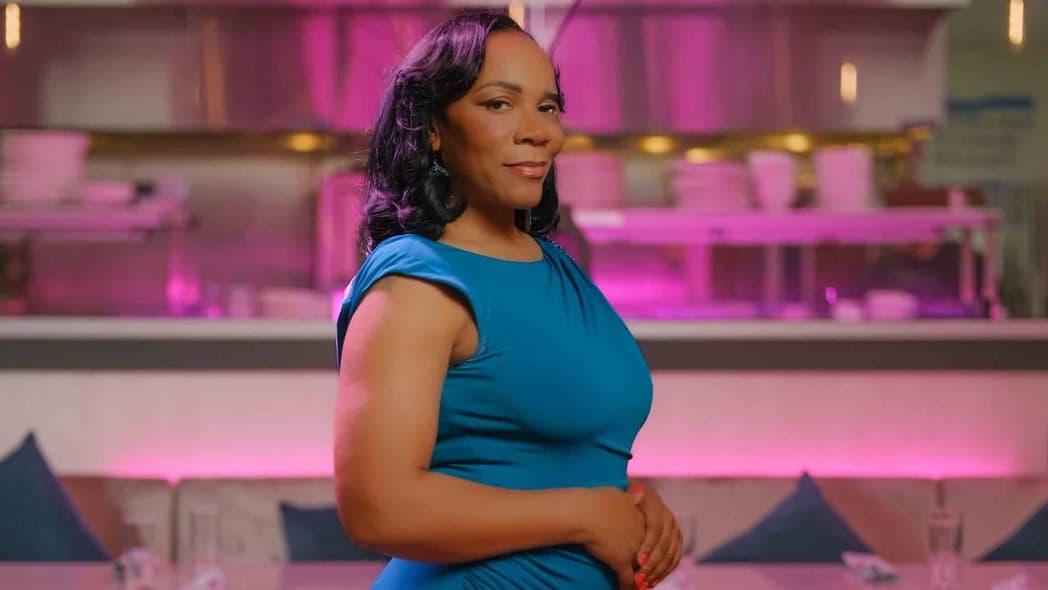
Nagela Duperval didn’t set out to become a restaurateur. She set out to make more money.
A Haitian immigrant who arrived in the United States at age 8 without speaking English, Duperval spent years juggling a 9-to-5 job, real estate investments and the responsibility of supporting nearly everyone in her household. By the time she considered opening a restaurant, entrepreneurship had already become part of her vision for the future.
“It really was another investment opportunity,” Duperval told TheGrio. “But because it took so long, I realized, wow, this is something that is a passion.”
That passion became Ou La, a Caribbean restaurant in Carteret, New Jersey, that Duperval opened in partnership with Chef Duke, whose elevated take on Haitian cuisine she fell in love with during the COVID-19 pandemic.
The restaurant, known for its oxtail and red snapper, has drawn diners who often do not realize until midway through their meal that what they are eating is Haitian food.
“A lot of people — when I was doing the research before we opened — I wasn’t able to call it a Haitian cuisine because people don’t know Haitian food,” Duperval said. “Most people don’t say, ‘Oh, I’m going to go to a Haitian restaurant tonight,’ unless you are Haitian. So I didn’t want to limit myself.”
The solution was to market Ou La as Caribbean cuisine rather than specifically Haitian cuisine. Haitian diners recognize the dishes immediately. Others discover Haitian food for the first time.
Long before Ou La existed, Duperval was learning what it meant to start from nothing. When she and her mother first arrived in the United States, they slept on the floor of a relative’s home in a household that was not always welcoming.
While those early challenges shaped her resilience, Duperval said motherhood at a young age ultimately had the biggest impact on her work ethic.
“What started to shape me was when I became older; because I had kids so young, I just was like, listen, working a 9 to 5 is not gonna be enough for me,” she said.
“9 to 5 is not gonna be enough for me”
That mentality followed her into entrepreneurship. When people warned her that opening a restaurant as a Black woman with no industry experience would be difficult, she did not fully believe them.
“I had the good credit. I had the properties that I sold. I had money in the bank,” Duperval said. “I just felt like, oh, I’m Naj, I’m gonna get investors, I’m gonna get support.”
But securing that support was more difficult than she expected. As Ou La got off the ground, paychecks bounced, vendor bills went unpaid, and there were moments she was certain she would have to close.
“I was ready to close these doors,” she said. “The struggle is real. The struggle is still real.”
What kept her going was a combination of stubbornness, prayer and support from her brother. After he received a settlement following a serious car accident, he handed Duperval nearly all of it, approximately $450,000 of a roughly $498,000 check, with no contract, no repayment terms and no conditions.
“No paperwork, no nothing. Just trust,” she said.
Her mother, meanwhile, has been at the restaurant since 5 a.m. every day, cooking the Haitian food that anchors the menu.
“She keeps harassing me because I’m not paying her enough, which drives me crazy,” Duperval said. “But I’m like, ‘Ma, just wait for the money. It’s coming.'”
Duperval still works a full-time corporate job, leaving around 3 p.m. each day to head to the restaurant, where she has focused on building a team that can operate without her involvement in every aspect of the business.
“When we first opened, I found myself just doing the work,” she said. “I’m in the kitchen, I’m cleaning, I’m bussing tables, I’m hosting. I was doing it all. But now I’m trying to be more of a delegator.”
A new business partner with deeper industry knowledge has helped stabilize operations. Checks no longer bounce. Vendors are being paid. And Ou La is expanding, with a takeout location and a second full restaurant in negotiation in Jersey City, New Jersey.
“Things are just opening up for me … I’m seeing the light,” Duperval said.
As much as Ou La has become a source of pride for Duperval, her five-year vision is not to run it forever. Once the planned development in Carteret is complete, Duperval intends to sell.
“Create such a brand that I can eventually just sell, travel, find me a husband and just enjoy my money,” she said. “I’ve been working since I was 14 years old.”
She has thought about who she would pass the business to, and it is not her children. “My kids don’t want this,” she said.
Instead, Duperval said she would rather hand Ou La over to the group of high school students who work at the restaurant and have shown a greater hunger for the business than anyone else around her.
“They are my ride or dies,” she said. “If I’m able to pass this on to someone, prepare them, help them get the financing they need, I would rather do that.”
The journey to building Ou La taught Duperval lessons she now hopes other aspiring Black women entrepreneurs can learn from without enduring the same struggles.
“Find someone that is already in the industry, that really knows the industry, before you jump in,” she said. “I don’t recommend anybody doing it the way that I did it. It was very dark, very depressing.”
For those who choose to pursue that path, Duperval said having a strong faith system is essential.
“Put prayer on the front line,” she said. “Because prayer is really the reason I am even still here.”
