
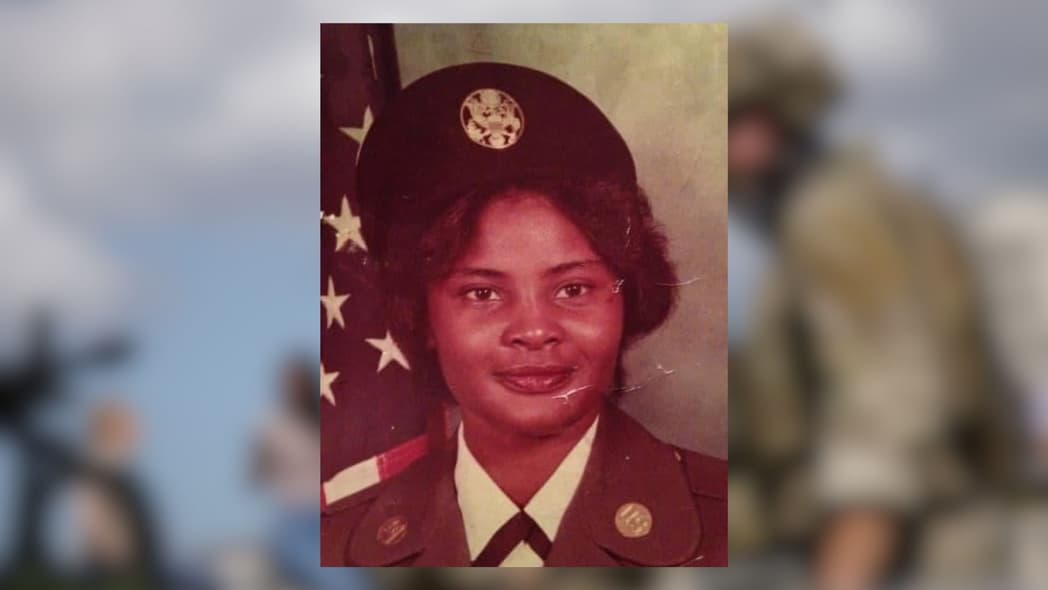
June 12 is Women Veteran’s Recognition Day in honor and remembrance of the day in 1948 when the Women’s Armed Services Integration Act was signed, allowing women the right to permanently serve in the Armed Forces.
Editor’s note: The following article is an op-ed, and the views expressed are the author’s own. Read more opinions on theGrio.
My mother grew up in Clarksdale, a small city in the Mississippi Delta that proudly calls itself the birthplace of the blues. Recently, it drew attention as the setting for the award-winning film “Sinners,” a story rooted in the 1930s, that broke Academy Award records with 16 nominations.
But what struck many people I know wasn’t the history of the city. It was something more basic. For years, Clarksdale didn’t even have a movie theater. The nearest one was over an hour away.
That fact surprised my friends and academic colleagues. It shouldn’t have. It only feels surprising if you’ve never seen rural poverty up close.
Across the United States, rural communities in the South face persistent disinvestment, with fewer hospitals, grocery stores, and cultural institutions than their urban counterparts. The military has taken my family far from the Delta, and with that distance comes a kind of cultural disconnect. I now live among people who have never had to think about what it means to grow up somewhere without basic amenities, or what it takes to leave.
At 17, my mother did something neither of her parents had the chance to do: she graduated from high school. She dreamed of going to college, but the cost made that dream feel out of reach. As the oldest of six children, she understood what home would mean—another mouth to feed, another strain on already limited resources.
So, at 17, she enlisted in the U.S. Army.
That decision changed everything. She was 17 years old, so she required her mother’s signature to enlist. She served for 20 years beginning in 1980, built a career as a food inspector, and eventually earned a master’s degree. Her service created opportunities not just for herself, but for me, her only child. There is no version of my life that exists without that decision. I spent most of my childhood on military bases and by luck, my mother’s design, or both I always landed in well-funded school systems. I’m a law professor and director of a veteran’s legal clinic because of all the sacrifices she made for me.
But many often talk about military service in terms of honor, patriotism, or duty—particularly as the country approaches its 250th anniversary celebration. Those things matter. What people talk about far less is how deeply military service in the United States is intertwined with economic inequality.
Studies have consistently shown that Black Americans are disproportionately represented amongst enlisted recruits because the military is seen as one of the most accessible pathways to stable employment, education benefits and upward mobility.
The U.S. Army achieved a major recruiting turnaround in Fiscal Year 2025, meeting its goal of 61,000 active-duty recruits four months ahead of schedule. This success reflects a shift from recent shortages, with roughly 80% of new recruits being men. Although African-Americans make up about 14% of the US population, 26.6% of new Army recruits were African-American.
Although the South is seeing significant income growth as of late, data from 2024-2025 shows median US household income at around $83,730 while in states like Mississippi the average household income remains under $60,000. Undoubtedly, the Army’s average enlistment bonus of around $12,000 is particularly enticing for recruits from states like Misssissippi.
For many young Americans, especially those from impoverished areas like the Mississippi Delta, the military is not a calling. It is a pathway out. It is essential to think of migration as something that happens across borders. But there is another kind of migration happening every day within the United States. Young people leave places defined by limited opportunity and move into an institution that offers a chance at upward mobility.
In that sense, many servicemembers are internal migrants. They leave home not because it is easy, but because staying often feels impossible. Like immigrants, they enter unfamiliar environments with their own rules, languages, and expectations and they adapt. They send money home. They carry the weight of distance from family and community. They build new identities while holding onto pieces of where they came from.
The comparison of enlistments to immigrants is not perfect, but the parallels are real and they are rarely acknowledged. Enlistment is an escape from economic and social adversity. Studies show that 46% of enlisted soldiers cited economic or job-related reasons for joining, and that individuals from lower socioeconomic backgrounds, or those raised in poverty, have higher odds of volunteering.
My mother left the Delta with little certainty about what her life would become. I often wonder whether she knew, when she packed her belongings and carried her Southern accent into basic training, that she would never live in Mississippi again. The Army gave her opportunity, but it also required sacrifice: distance from home, from extended family, from the place that shaped her.
Her story is not unusual. Economic inequality is not just a backdrop to military recruitment, it is a driving force behind it. If people were more honest about this, it might change how we think about both poverty and service.
It is important to ask harder questions about why so many young people see enlistment as their most viable option for education and stability. And we might also expand the understanding of others who reinvent themselves through migration.
The United States has always been shaped by people who leave home in search of something better. Some cross oceans. Others cross state lines. My mother did the latter. And like so many others, she carried her home with her, even as she built a life far away from it.
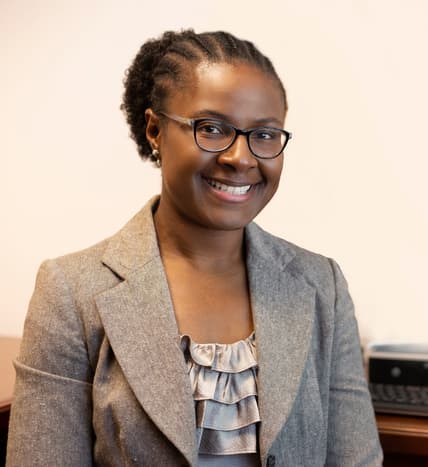
Yulanda Curtis is a clinical professor in the University of Illinois College of Law and the director of the Veterans Legal Clinic. She is a Public Voices Fellow with The OpEd Project.
