
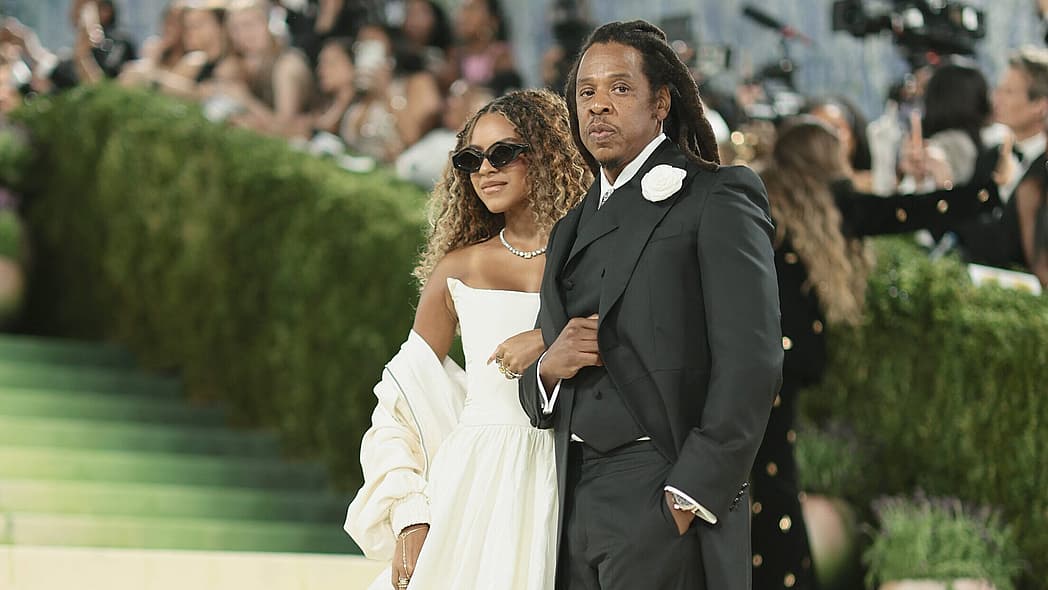
Nearly 10 years ago, Jay-Z pulled the ultimate girl-dad move. When his then five-year-old daughter revealed that she did not like the coils that made up her natural hair, the Brooklyn rapper decided to swap out his signature low-cut Caesar with the deep waves to grow out his hair. Since then, fans have watched his hair transform from an afro to free-form locs to long thick wicks. That was until the 2026 Roots picnic, where HOV made his return to the big stage, sporting an all-new look in honor of his father, Adnis Reeves, who used to rock an afro and was a fan of the NBA’s Philadelphia 76ers.
In a video documenting Jay-Z’s now viral loc detangling journey, Beyoncé revealed just how much of a family affair his hair transformation has been. From the beginning to now, the rapper known as Shawn Carter was motivated by generations of his family. While the end of his loc journey was in homage to his father, the beginning of it was in honor of his eldest daughter, Blue Ivy Carter.
“The real reason Jay grew out his hair was to show Blue that her hair was like his hair,” Beyoncé shared. “Our daughter was about 5, and she was not feeling very confident about her hair at that time.”
Hair insecurity among little Black girls is painfully common, but Blue Ivy Carter’s relationship with her hair has been uniquely, and unfairly, public. Before she was old enough to have her own social media account, her hair was already a trending topic.At just 2 years old, the first Carter child made headlines after a New York woman named Jasmine Tolliver launched a petition demanding Beyoncé “Comb Her Hair.” The since-deleted petition garnered hundreds of signatures as critics accused the “Renaissance” singer of neglect. Tolliver later claimed it was a joke, but the damage had already been done. The discourse snowballed, spreading across timelines and pulling in notable names like Karrueche Tran, who publicly weighed in on a toddler’s naturally coiled hair. By 2020, Vanity Fair film critic K. Austin Collins went viral for a tweet targeting Blue, who was 7 years old at the time.
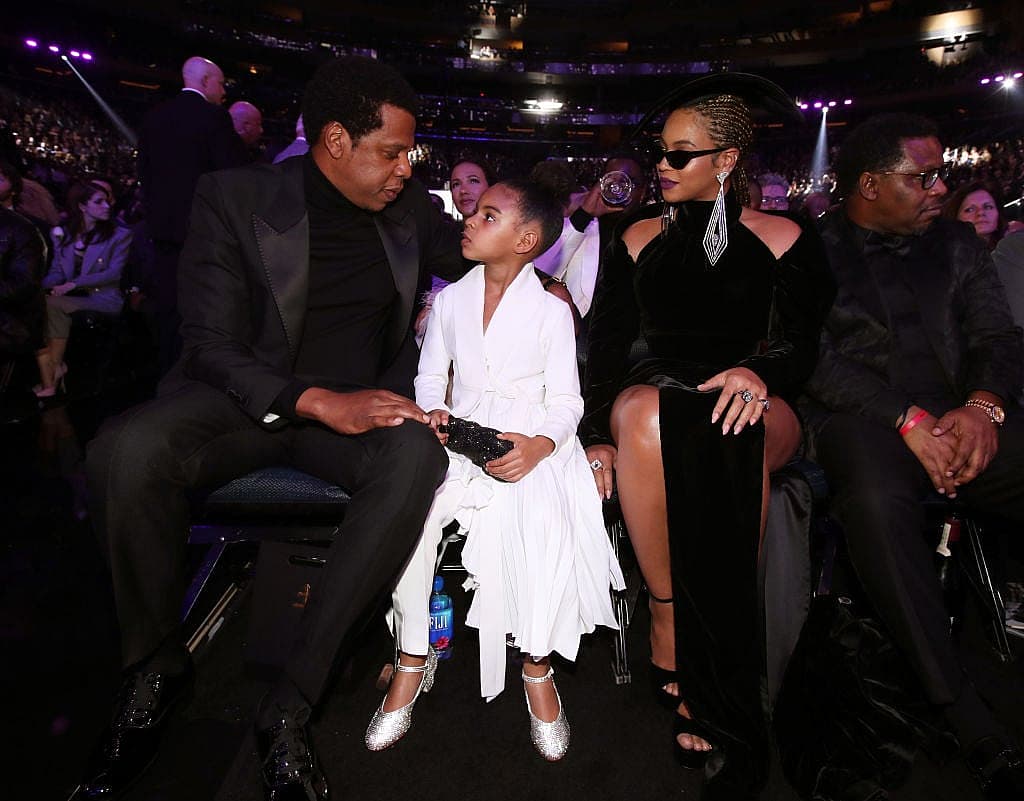
“I have a feeling the Jay Z face genes are about to really hit Blue Ivy, and I feel so sorry for her,” Collins tweeted at the time.
The obsession with her hair and appearance persisted through the years as social media users went from calling her nappy-headed to loving and sometimes hating the boho braids she’s worn on stage with her mother during the “Renaissance” and “Cowboy Carter” tours. Through all of it, Blue Ivy Carter never asked to be a referendum on Black girlhood, but that’s exactly what she became, making HOV’s decision even more meaningful.
“When she told her father that, it inspired Jay to grow out his hair. We really wanted her to love and embrace every inch of her gorgeous curls. It also inspired Blue to be the voice of the award-winning book, “Hair Love,” by Matthew A. Cherry. As well as songs like ‘Formation”’…Baby Hair and afros and ‘Brown Skin Girl,’” Beyoncé continued. “And who would have thunk all of this healthy hair could grow beyond that low-cut Caesar with deep waves?”
That revelation does more than cement Jay-Z’s status as a devoted father. It reframes his entire loc journey as an act of intentional parenting. By letting his hair grow and leaning into the kinks and coils of his own texture, he handed his daughter something no Instagram explore page could replicate: a mirror. There’s a particular kind of reassurance that only comes from watching someone in your own home navigate wash day, wrestle with shrinkage, and still move through the world with their head held high. For a little girl who was already being told her hair was a problem, seeing her father decide his was a crown changes everything.
