
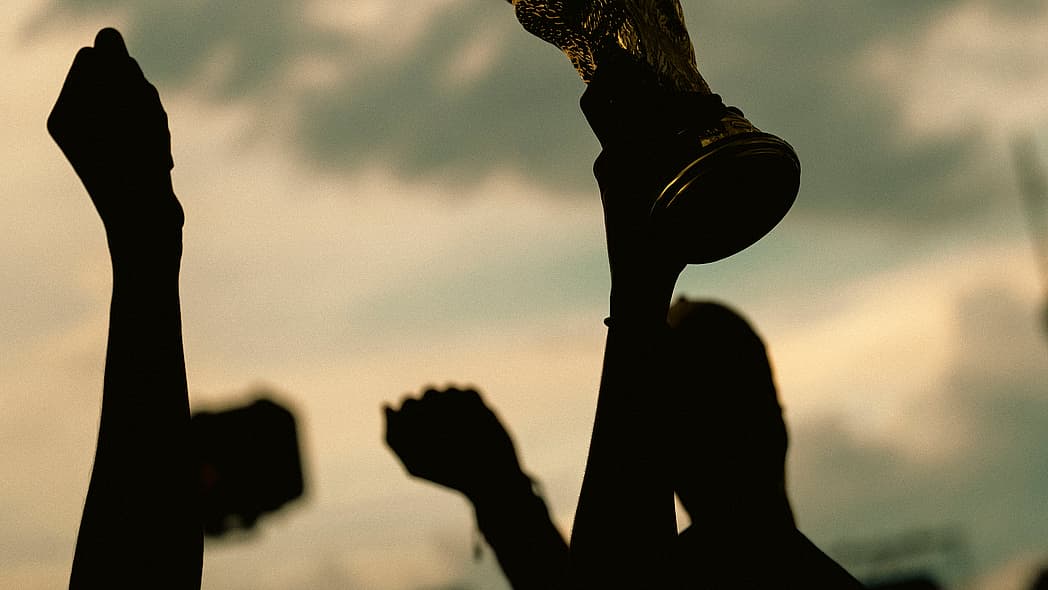
For the past few weeks, the World Cup has brought a new sense of community to the streets of the United States. As fans travel from around the globe to watch their countries compete, timelines have been flooded with images and videos of rival supporters coming together to celebrate. But beyond the feel-good moments, the tournament has also served as an eye-opening education, especially for communities that have rarely had a window into what’s happening beyond their borders.
@sportbible The World Cup brings everyone together 🥹 🎥 TT/jhonrendon_8 #FIFAWorldCup ♬ original sound – SPORTbible
For those who live by Issa Rae’s mantra of “rooting for everybody Black,” applying that philosophy to this World Cup has been more complicated than usual. While it’s easy to apply for the predominantly Black countries like Haiti, Curacao, Senegal, Cabo Verde, Ghana, the Ivory Coast (Côte d’Ivoire), DR of Congo, South Africa, and more competing in the World Cup, the reality is that countries like Ecuador, France, England, the Netherlands, Switzerland, and Canada also have strong rosters of Black players.
View on Threads
View on Threads
View on Threads
That observation, whether or not it surprises you, is a powerful reminder of just how expansive Blackness really is. When we talk about colonialism, we tend to focus on the systems of oppression it built, particularly in the United States. And those realities are undeniable. But tucked inside that painful history is something else: colonialism and the slave trade scattered Black people across the entire globe, and in each of those places, we built micro-communities, created culture, and put down roots. So just as corners of the internet were shocked to discover Black people in Scotland last year, fans watching the World Cup are now finding Black communities woven into the fabric of Europe, Latin America, and beyond.
“[American schools] barely teach them [Americans] about black people in America”, Roy Woods Jr. previously pointed out, reflecting on Black Americans’ reactions to these discoveries. “People can laugh about dumb Americans not knowing there are black people in Scotland, but this tells us a lot about the differences between education systems and what governments define as history.”
The comedian also noted, “how much entertainment influences people’s stereotypical beliefs.”
“Because if you’re told to [picture] a Scottish person, I would never [think of a Black person] but if you said a Black Brit. That’s not a surprise. We’ve seen enough of them. And then, if you said Scottish, I’m sorry that’s white. So I think that this whole Black Scottish TikTok [trend] is just indicative of just the culture.”
So when we say Black people are not a monolith, we mean it in the fullest sense; our cultural norms, ethnic backgrounds, languages, and national identities are as varied as the flags flying in this tournament. And yet, through all of that, our Blackness serves as a connective thread. The World Cup is a simple reminder that our Black cousins live everywhere.
As one social media user noted: “The World Cup is all the cousins having really fun sleepover parties and getting along beautifully while our parents are beefing.”
