
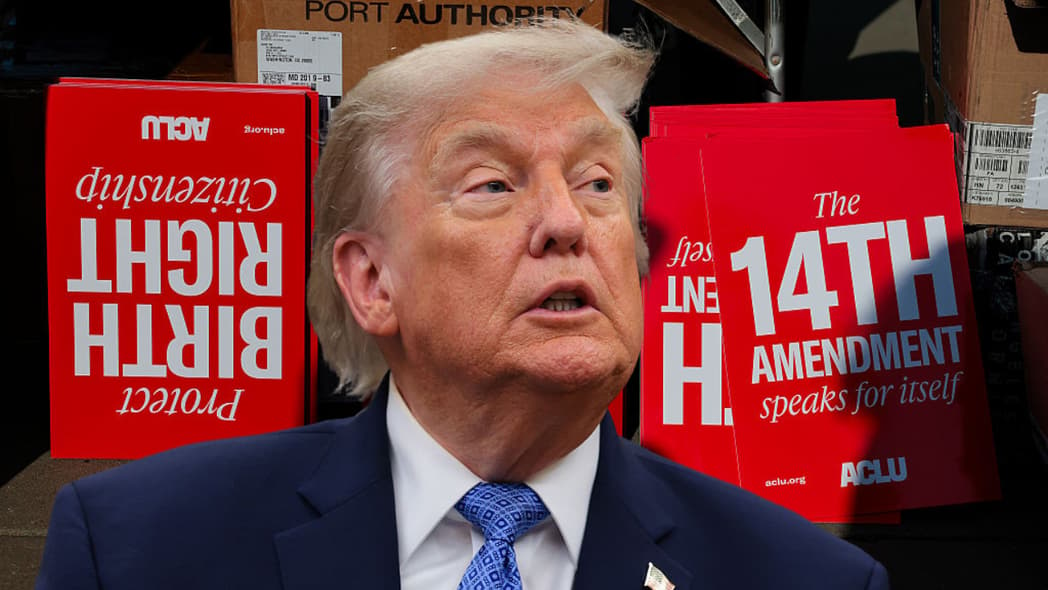
President Donald Trump called on Congress to end birthright citizenship shortly after his executive order seeking to do so was rejected by the U.S. Supreme Court.
Trump, who has repeatedly argued that the birthright citizenship clause in the 14th Amendment was only intended for the “babies of slaves,” took to Truth Social to declare the court’s 6-3 ruling “too bad for our Country.”
However, the president declared, “We can easily make it up in Congress through Legislation, with the support of the President, that has now been determined during this process.”
Trump added, “No long and unwieldy Constitutional Amendment is necessary! Congress should start TODAY to work on ending expensive and unfair to our Country, Birthright Citizenship. They will have my Complete and Total Support!”
President Trump’s new push to end birthright citizenship comes after the majority opinion of the Supreme Court determined that his executive order seeking to end birthright citizenship protection for the children of undocumented individuals living in the United States was unconstitutional.
“The Framers of the Fourteenth Amendment extended that promise to ‘every free-born person in this land,'” said the majority opinion authored by Chief Justice John Roberts.
Trump’s call for Congress to do what he was unable to do through executive power is unlikely to succeed, given the constitutional constraints. Despite his claim that “no long and unwieldy Constitutional Amendment is necessary,” any change to the 14th Amendment would have to be done through a constitutional amendment. That means a two-thirds supermajority of both the U.S. House of Representatives and the U.S. Senate would have to vote on the legislation. The makeup of Congress, in which Trump’s party holds slim majorities in both chambers, almost guarantees that such an attempt would easily fail.
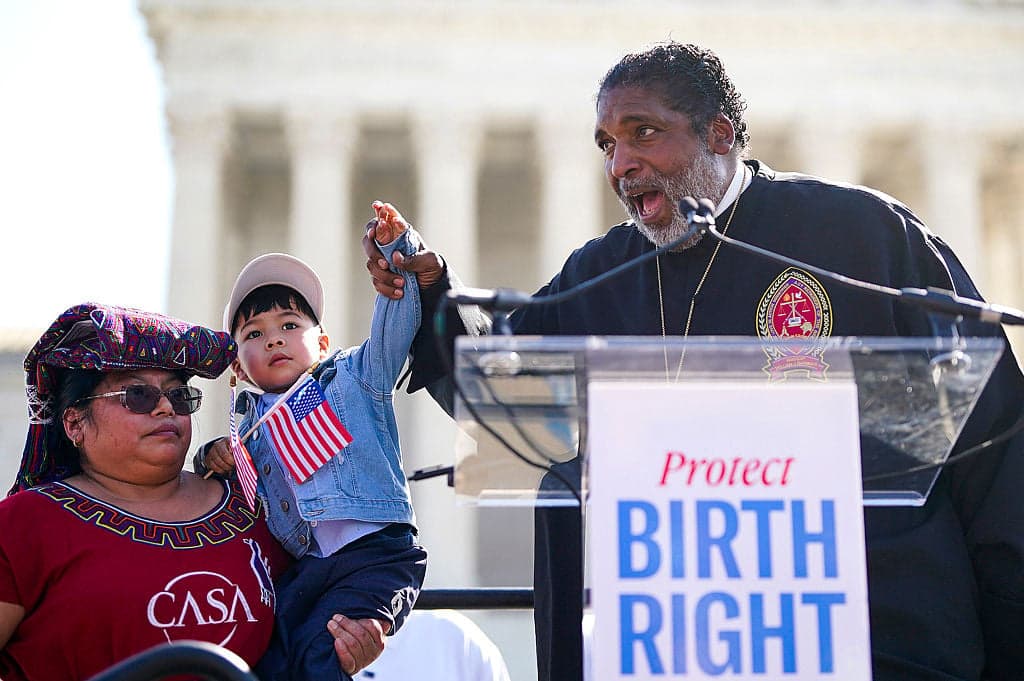
Democrats, civil rights leaders, and racial justice advocates have celebrated the Supreme Court’s ruling that Trump’s attempt to end a constitutional right for nearly 160 years was unconstitutional.
“The 14th Amendment was enshrined in our Constitution during Reconstruction to ensure that formerly enslaved African Americans would not have their citizenship questioned on the basis of their race,” said U.S. Rep. Hakeem Jeffries (D-N.Y.), the Democratic leader in the U.S. House of Representatives.
“More than 150 years later, it has withstood the unconstitutional attack launched by Donald Trump and his most sycophantic and xenophobic enablers,” Jeffries added. “On the eve of America’s 250th birthday, the far-right MAGA conservatives have failed in their quest to remake the United States, and American values have prevailed.”
“The President took an oath to uphold the Constitution — not rewrite it whenever it doesn’t serve him. Newsflash, Donald: We live in a democracy, not a dictatorship,” said U.S. Rep. Jasmine Crockett (D-Texas).
Rev. Al Sharpton, founder and president of the National Action Network, said of the ruling: “Birthright citizenship was shaped by this country’s painful history of slavery, Dred Scott, and the long struggle to ensure that Black people born in America could not be denied citizenship or equal protection. That history matters. If you are born on this soil and subject to its laws, your citizenship cannot be taken away by executive order or political pressure.”
Kristin Powell, executive director of Black Futures Lab, said that despite the victory to protect birthright citizenship, Black and marginalized communities must remain vigilant as other rights are being diluted under the Trump administration.
“We recognize that this ruling comes amid a steady expansion of executive power and continued attacks on our rights, our communities, and our democracy. The same forces that sought to strip away birthright citizenship are still working to divide us, to decide who belongs and who does not, and to concentrate power in the hands of a few,” said Powell. “Upholding birthright citizenship is a reminder that the promise of this nation has always been shaped by the people who demand it live up to its ideals.”
She added, “What happens next is up to us. We must continue to organize, protect our rights, and build a multiracial democracy where everyone not only belongs but also has the power to shape the future.”
