
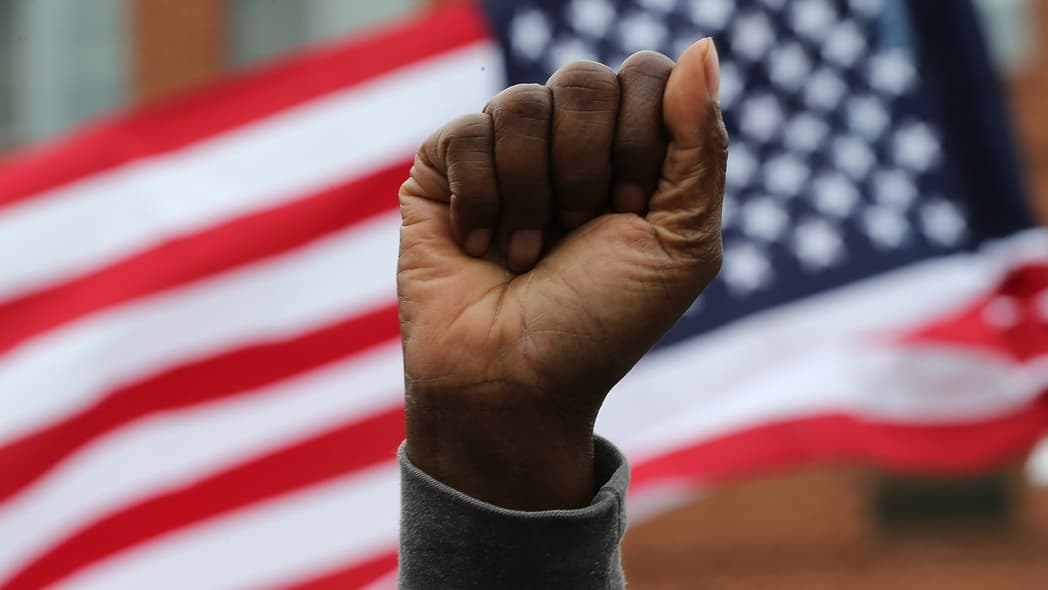
As the United States marks 250 years, for Black Americans, grappling with the nation’s history comes with a sobering reality. Of those more than two centuries as a Democratic republic, Black people have only truly enjoyed full citizenship for just more than 60 years, dating back to the signing of the Voting Rights Act of 1965.
Prior to that, most of America’s existence has included the enslavement of Black Americans and, as Justice Ketanji Brown Jackson reminded in a recent U.S. Supreme Court opinion, Black people being “relegated to an inferior caste” by law or otherwise.
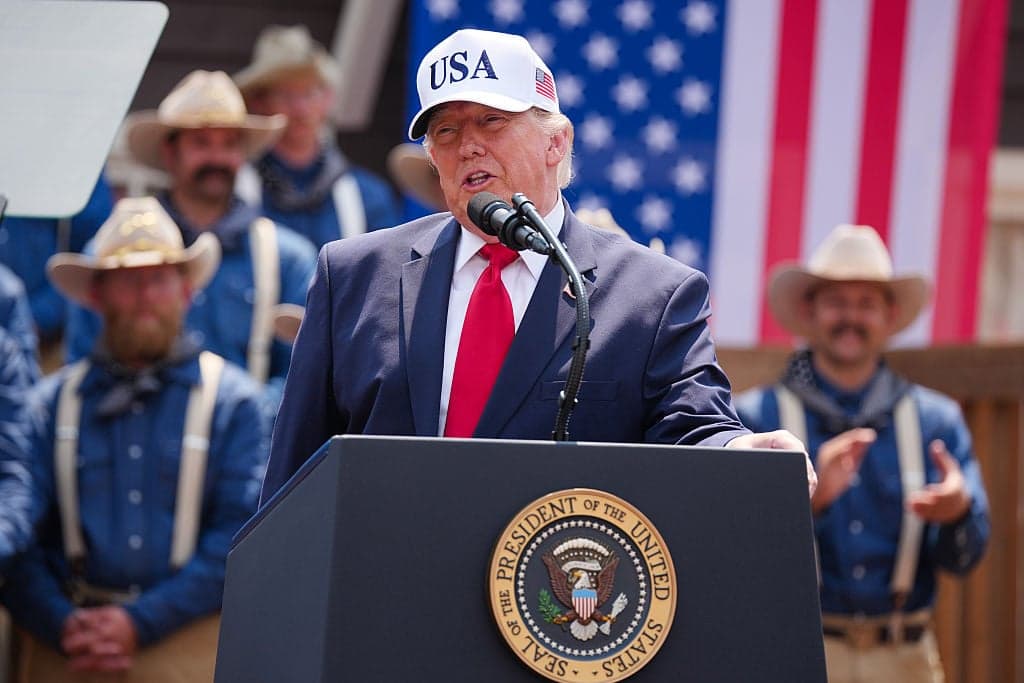
As President Donald Trump marks this historical moment for the United States, Black Americans and other minority groups–women, LGBTQ+, Latino, and Hispanic–have seen rollbacks of civil rights protections and equal access to the “unalienable rights” that were supposed to make America “Great.”
“We say that all men are created equal, but we also haven’t ensured that no matter who you are and where you come from in this country, and what color you are, that you have access to the tools that will help you to succeed in life,” said Patrice Willoughby, chief of policy and legislative affairs at the NAACP, the nation’s oldest civil rights organization.
Despite the promises made to formerly enslaved Black people (namely, 40 acres and a mule) after sacrificing their lives in the American Civil War, which nearly broke the nation’s short-lived existence, Black Americans are still demanding equity from a country that has actively excluded them since its founding.
That is ironic, notes Willoughby, considering that in the U.S., many “freedom movements” were powered by the organizing and leadership of Black Americans, including formerly enslaved abolitionists such as Frederick Douglass, Harriet Tubman, and Sojourner Truth, and civil rights leaders like Dr. Martin Luther King Jr., Bayard Rustin, and the Rev. Jesse Jackson.
“Every other racial and ethnic group has patterned their liberation struggles on the work of Black America,” she told theGrio.
“It’s a much broader question of fairness and opportunity that we need to examine as a society, even as we acknowledge that the past history of this country has created disadvantage based upon race,” said Willoughby.
Despite symbolic gains for Black Americans, like the presidential election of Barack Obama, and historical wins like the Civil Rights Act and Voting Rights Act, rollbacks have expanded, and many socioeconomic barriers persist. Under President Trump, Black Americans have the highest rates of unemployment and poverty, and yet the lowest rates in wealth, wages, health care, and homeownership.
“When you think about the five demands that the formerly enslaved required–education, housing, healthcare, good-paying jobs, and transportation– those are literally all of the areas in which this administration has attacked [Black Americans],” said Chicago Mayor Brandon Johnson, who repeatedly battled with the Trump administration over immigration and law enforcement in the majority Black and brown city.
He told theGrio, “This country cannot fulfill its true promise of life, liberty, and happiness without the complete liberation of Black people.”
Black leaders are also grappling with former enslaved states in the South drawing Black voters out of power, and the efforts to erase or whitewash Black historical events or facts from public schools and spaces.
“Donald Trump has continuously tried to whitewash America to try to rewrite history, not just decades-old history, but also recent history, throughout the course of his administration,” said Austin Davis, the current and first Black Lieutenant Governor of Pennsylvania.
He told theGrio, “We have to learn from the history of America, and yet that is a complicated history for many folks, and I think the way to not repeat it is to know our history and to talk about it openly and to share it.”
Jeffery Robinson, CEO and founder of The Who We Are Project, said claims made by Trump and others that the history of U.S. slavery and racial subjugation of Black Americans was so long ago are dishonest.
“I was born in 1956 in Memphis, Tennessee. I was 11 when King was assassinated. I remember the passage of the Voting Rights Act and the Civil Rights Act. My parents bought a house in a white neighborhood in 1969 after King was assassinated because of the passing of the Fair Housing Act. So this is not ancient history, and those were things that were passed in the ’60s,” Robinson told theGrio.
The former ACLU legal director said efforts to censure what children are taught about their history and the truth of race in America are about suppressing the truth because “if they learn it, their minds will be changed.”
“They will view the world through different eyes, and they will make decisions that are different than the ones their parents make,” explained Robinson. “I look at all the money and all the effort that’s being spent to suppress this information; somebody out there is f–king terrified of what will happen if this information is widespread throughout the country.”
That is why leaders continue to advocate for reparations, a more than a century-old unfulfilled promise to the formerly enslaved.
As Democrats in Congress continue to push to pass H.R. 40 in Congress, Mayor Johnson tells theGrio that reparations policy has to “begin to take root” at the state and local levels.
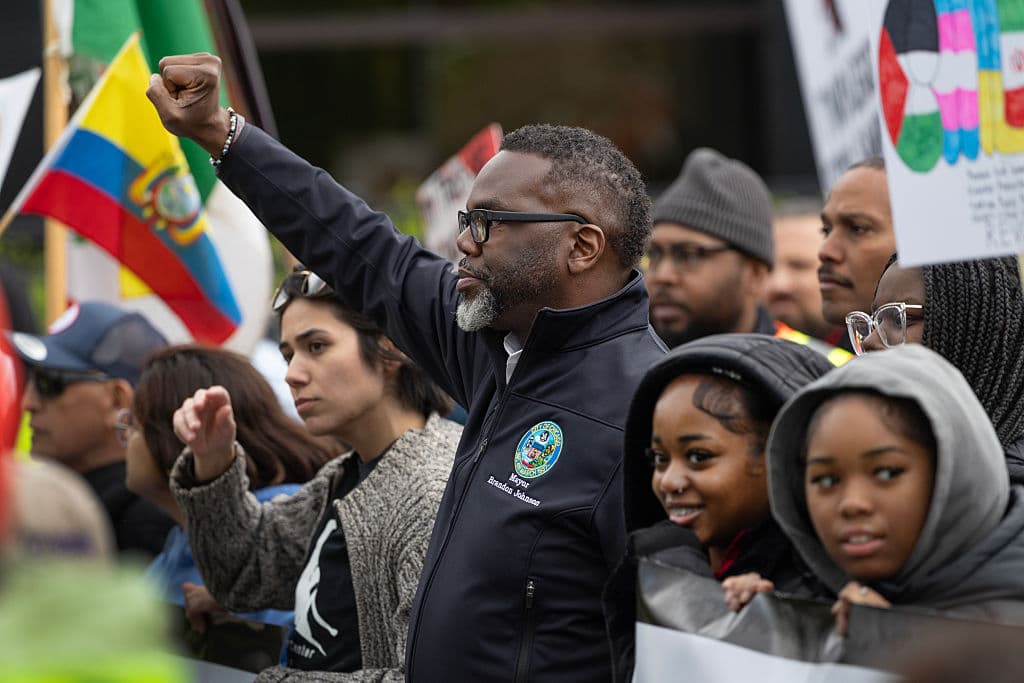
“Every single area of need–healthcare, jobs, transportation–at the local level, is where we have to become active in pushing towards repairing the harm, of course, that was created through white supremacy in the legacy of slavery,” said Johnson.
The Trump administration recently joined a federal lawsuit against the city of Evanston, Illinois–less than 20 miles from Chicago–over its municipal reparations program that provides $25,000 to eligible Black residents or their descendants to remedy 20th-century housing discrimination. A similar program for first-time homebuyers in Chicago is being spearheaded by Mayor Johnson and the city’s reparations task force.
Johnson sees an irony in efforts to stop the reparations work or restrict access for Black Americans, telling theGrio, “If it weren’t for Black America, this nation would not have the economy that exists today, the most expansive economy in the entire world at the richest time in the history of our world.”
Robinson, who has spent years researching the history of U.S. slavery, noted that the United States already paid reparations to white enslavers.
“We paid reparations to slave owners in Washington, D.C. to the tune of $1 million in 1862, money for their slaves that they freed, and then on top of that, Abraham Lincoln, as part of this law, paid $100 to all the freed, enslaved people if they would leave the country,” said Johnson. “This is when you start putting facts like this in front of people. Many people are against reparations because they have no understanding of the international history of reparations or what reparations could mean.”
So, as Black Americans continue to stare down a frontier of obstacles, leaders say communities are up for the challenge — starting with this upcoming midterm election.
“I think we have a huge opportunity this November to really make a national referendum on the Trump administration and his enablers in Congress, and against the people who are celebrating the downfall of the VRA,” said Lt. Gov. Davis.
“I think this is a critical moment for folks to organize and mobilize, not just voting in their communities, but stepping up to run for office, and to serve, and to be a part of the solution,” he told theGrio. “I think the most pressing thing we can do is organize around these midterm elections to make sure that we finally put a check on Donald Trump’s chaos.”
Mayor Johnson said that while America at 250 may not be living up to its ideals, it can do so in the future — with the help, yet again, of Black Americans.
“Black America has the power and the ability to secure civil rights, labor rights, voting rights, economic rights, not just for us, but for all,” he told theGrio. “That’s the beauty of Blackness…[and] position of power; we’re not stingy people. So when we benefit, the entire country benefits.”
