
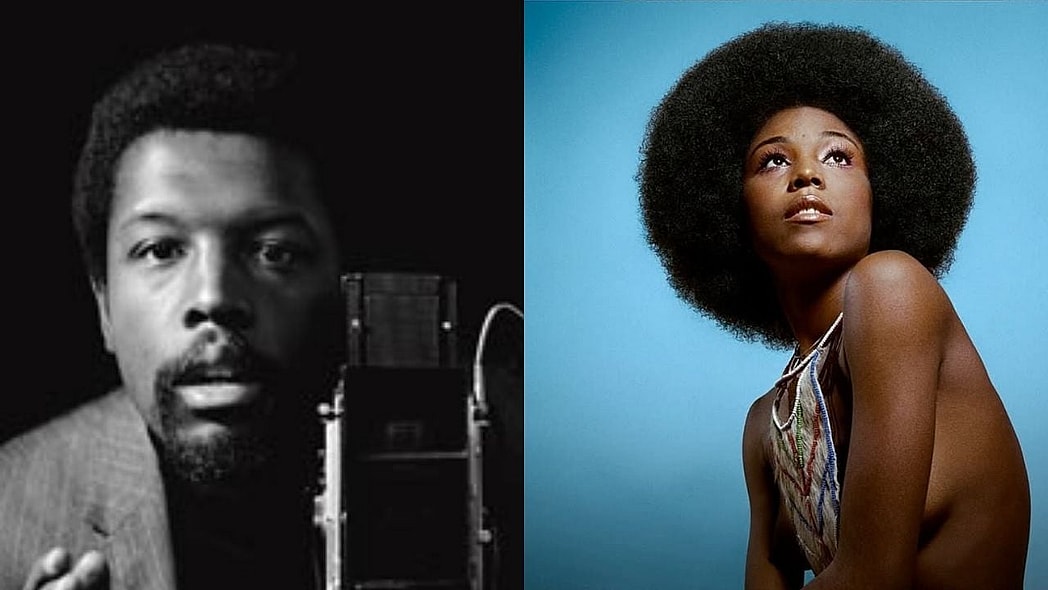
Long before the Met Gala celebrated Black style, before the natural hair movement of the 2010s championed kinks, coils, and curls, before policies like the CROWN Act, and before dark-skinned Black models like Naomi Campbell became global superstars, there was a movement that first dared to declare “Black is beautiful.”
The Black Is Beautiful movement of the early 1960s introduced the concept into the cultural lexicon through a series of Afrocentric fashion shows, cultural events, and photography that celebrated Black beauty in its natural form. Inspired by the teachings of Marcus Garvey, it arrived as a cultural affirmation during the rise of the Civil Rights, Black Power, and African liberation movements happening simultaneously. At the center of it all was a young Harlem photographer named Kwame Brathwaite.
Actor Jesse Williams, Alicia Keys, and her husband and producer Kasseem “Swizz Beatz” Dean are gearing up to executive produce “Black Is Beautiful: The Kwame Brathwaite Story,” a documentary directed by Yemi Bamiro chronicling the rise of the movement and Brathwaite’s lasting influence, which can still be seen today across fashion, beauty, and visual arts. However, it may surprise some that the movement initially faced resistance, largely driven by the era’s respectability politics.
“There was lots of controversy because we were protesting how, in EBONY magazine, you couldn’t find an ebony girl,” Brathwaite told Aperture in 2020.
On Jan. 28, 1962, Brathwaite and his brother Elombe Brath formally launched the movement at Harlem’s Purple Manor with a fashion presentation called “Naturally ’62.” The show featured models wearing their hair in natural textured Afros, showcasing deep brown complexions and fuller figures in styles inspired by the African diaspora, including dashikis and bold traditional prints. Every detail, from the models themselves to the intentional use of the word “Black,” was considered revolutionary for its time.
The groundbreaking show was such a success for the multihyphenate brothers that even though it was originally conceived as a one-time event, it became an annual celebration. Their inspiration came in part from attending the annual Marcus Garvey Day celebrations in Harlem, which included beauty pageants celebrating natural Black beauty. They noticed that many contestants returned to straightened hairstyles afterward due to social pressures and stigma. That realization led them to create a platform that would consistently celebrate Black aesthetics on their own terms.
Brathwaite and Elombe, who were raised in a politically engaged family in Brooklyn, drew heavily from Garvey’s “Back-to-Africa” philosophy, which encouraged people of African descent to return to their ancestral homeland to escape racial oppression and build an independent global power. Together, the brothers co-founded the African Jazz-Art Society and Studios (AJASS), a collective that brought together artists, writers, musicians, dancers, and designers committed to cultural expression and self-determination. Through AJASS they created the Grandassa Models, headquartered in an office near the Apollo Theater on 125th Street, with “Naturally ’62” serving as their debut showcase.
“We wanted Black women to take pride in their own selves, in their looks and heritage, and let them be beautiful in their own right,” Brathwaite recalled in a 2018 interview with AnOther magazine. “We wanted to let them know they did not need to copy anyone else. They could wear their natural hairstyles and have Black pride.”
Beyond the runway, Brathwaite reinforced this mindset through his fashion and lifestyle photography. His images often featured women adorned with intricate beaded braids and natural hairstyles, alongside portraits of major Black celebrities like Grace Jones and Stevie Wonder, as well as everyday Black people captured in their everyday lives. Over the course of his career, he built an archive of more than half a million photographs that documented the beauty and complexity of Black life.
The impact of both the fashion shows and his photography helped kick off a cultural revolution that empowered Black communities to define beauty on their own terms, even as Eurocentric standards ruled the day. The movement also helped popularize the use of the word “Black” as a term of pride during a period when “colored” and “Negro” were still widely used. Brathwaite’s influence can be detected in modern culture, from fashion editorials to direct references, including moments when artists like Rihanna have drawn direct inspiration from his visual style.
“We started the look of the times,” Brathwaite told AnOther. “We started a tremendous movement to do for ourselves and expanding our rights. We learned what we needed to do in business so that we could produce our own work, be independent and self-reliant.”
Brathwaite died in 2023, nine years after his brother, but not before seeing his life’s work receive major institutional recognition. In 2020, a major exhibition at the Columbia Museum of Art in Columbia, South Carolina, organized with the help of his son Kwame Brathwaite Jr., introduced new audiences to the images that helped reshape how Black beauty is seen and celebrated.
