
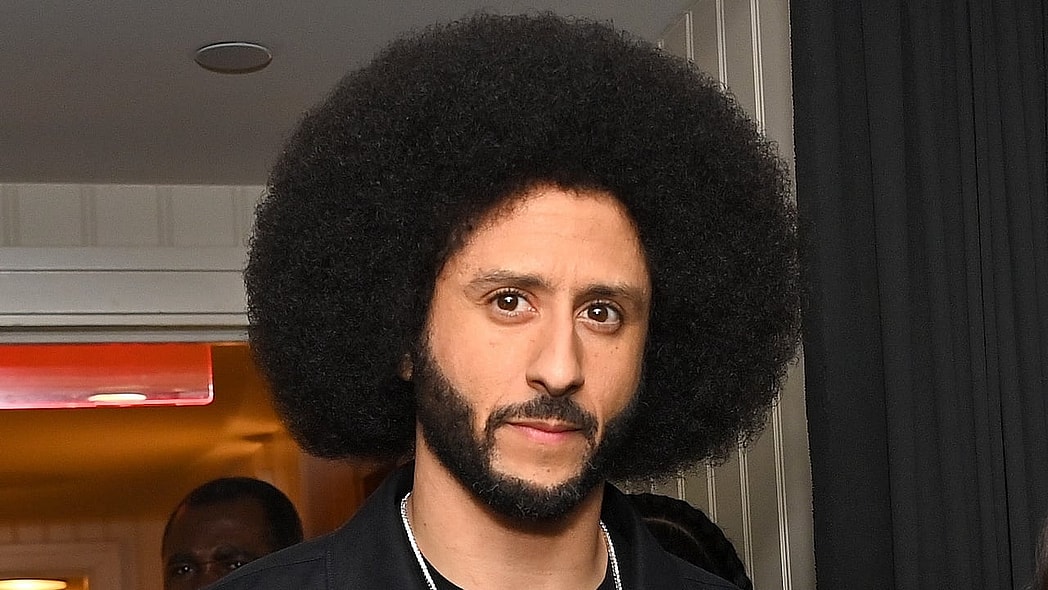
During his appearance at the African American Mayors Association conference on Friday (Apr. 10), former NFL quarterback Colin Kaepernick reflected on what he felt in the moment in the days leading up to his league-altering protest, and what has changed for him regarding police since then.
“I love what I do and I’m passoionate about it,” Kaepernick said during a fireside chat about the joys that football brought him while playing quarterback and how he’s meeting the moment now as an activist and leader. “There’s no other feeling like that. At the same time, you see Mario Woods getting killed. You see Philando Castile, you see Alton Sterling. And you also realize interactions I’ve had with police before I was an NFL player and how I was treated after that. Having the reality of, your position and power will also dicate how people interact and engage with you. It’s an interesting piece to grapple with.”
He added, “On top of that, having the background knowledge and study, you’re like, ‘Oh this is really … class and power dynamics at play.'”
Kaepernick’s appearance at the conference doubled as a preview of his upcoming memoir, “The Perlious Fight.” Due out on September 15, the book operates as part memoir for the former San Francisco 49ers QB and also as a manifesto. It comes 10 years after his protest against police brutality and racial inequality, in which he knelt during the playing of the national anthem before games.
The gesture ignited a political firestorm with some of Kaepernick’s fellow NFL players joining him in his protest and others emulating him across the sporting world, namely in women’s basketball. At the same time, Kaepernick found his jersey burned by fans who disagreed with his protest, and he became a talking point for Republican politicians, namely Donald Trump, during his first campaign in 2016.
In a statement published on Tuesday (Apr. 7), Kaepnerick reiterated that he wanted to offer context for why he knelt during the national anthem. Before then, he had remained seated on the bench while it was played.
“People saw the moment. But they didn’t see the years that made it possible: the questions about who I was; the injustices I could no longer ignore; the voices of those who came before me that I carried into that stadium,” he said. “That journey, from a Black kid navigating an identity the world didn’t always make space for, to an athlete who realized the game was bigger than football, shaped everything. When I took a knee, it wasn’t a sudden act.”
He added, “It was the result of years of becoming. And what came after taught me the most important truth: this fight has never belonged to one person. It belongs to all of us. We fight for each other. We build with each other. We must fight for justice and equity with the courage and clarity this moment demands. That is how we build a future worth fighting for.”
Despite leading the 49ers to Super Bowl XLVII in 2013, Kaepernick wouldn’t play another down in the NFL after his protest in 2016. The back-and-forth between he and the NFL would result in a lawsuit alleging the league colluded to blackball him. Ultimately, the two sides settled out of court for an undisclosed amount.
The African American Mayors Association Conference is an annual gathering of more than 500 Black mayors and leaders across the country. Among the notable moments from this year’s conference were a fireside chat with Stacey Abrams and the election of Baltimore mayor Brandon Scott as President of the Board of Trustees.
In a space surrounded by the leaders of now, Kaepernick’s moment in 2016 and his moves since then have placed him shoulder to shoulder with those who help shape the current world. With his memoir, a decade of thoughts and reflections seeks to shed light on one of the more consequential moments in recent American history.
