
When the University of Missouri moved to cut designated funding for its historic Black student government, help did not come from campus leadership. It came from a Black church nearly 900 miles away.
Alfred Street Baptist Church in Alexandria, Virginia, announced Sunday that it will fund the Legion of Black Collegians at Mizzou, according to Phil Lewis’ “What I’m Reading.” The decision comes after the university said it would end annual designated funding for the LBC and several other identity-based student organizations beginning in July, citing federal restrictions tied to diversity, equity, and inclusion programs.
“Although they’ve been defunded by the government, we have decided we are not going to let that student organization fail to have programming,” Rev. Dr. Howard-John Wesley, senior pastor of Alfred Street Baptist Church, said in a video shared online.
View on Threads
The announcement quickly resonated across social media, not only because of the financial support, but because of what it symbolized. A Black institution, states away, choosing to protect a Black student space when university leadership would not.
“So I wanted to let you know that Alfred Street Baptist is funding the Legion of Black Collegians on the campus of the University of Missouri so that this government and this administration knows when you won’t support us, we will support our own,” Wesley continued. “We take care of our own people.”
The university said the groups would still be able to apply for funding, but would no longer receive designated support from the school. Reports confirm that officials cited a Department of Justice memo restricting DEI practices as one reason for the change.
The University of Missouri’s decision was first reported in April, when the school announced it would stop directly funding five multicultural student organizations, including the Legion of Black Collegians, the Association of Latin American Students, the Asian American Association, the Queer Liberation Front, and FourFront, according to reports.
For the Legion of Black Collegians, the decision struck at the center of a long-standing Black student institution on campus. The LBC was founded in 1968 to give Black students at Mizzou a voice in student government. The organization has described itself as a resource and advocate for Black students, supporting programming, student organizations and campus life.
In response to the funding cuts, the LBC said the move reflected a broader retreat from support for students of color.
“We argue that this is intentional erasure,” the organization said, according to Higher Ed Dive. “The University is taking calculated steps to push minority students further away from the Mizzou stratosphere.”
That is part of why Alfred Street’s announcement landed so deeply. The church’s move was not just a donation. It was a reminder of the role Black churches, alumni networks and community organizations have long played in filling gaps left by institutions that Black students are expected to trust.
Across the country, colleges and universities have been revising or dismantling DEI-related programs under growing political and legal pressure. Those changes have often been framed as compliance decisions, but for Black students, the impact can feel more personal: fewer resources, fewer protected spaces and less visible support on campuses where they may already be underrepresented.
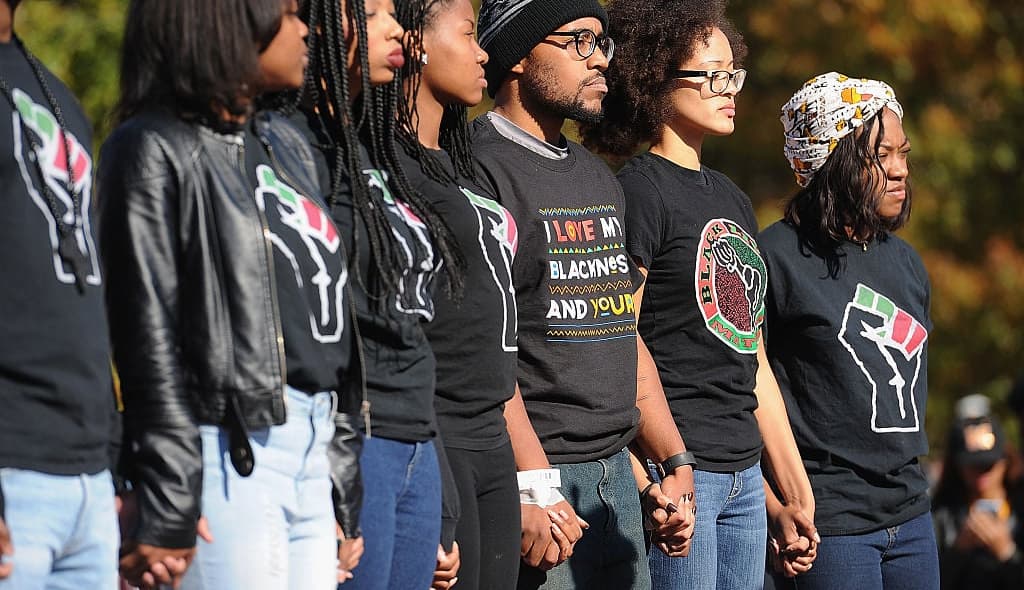
At Mizzou, the decision also carries added weight because of the university’s history with Black student activism. The school became a national flashpoint in 2015 after Black students protested racism on campus, leading to the resignation of then-University of Missouri System President Tim Wolfe.
Nearly a decade later, the fight over who funds and protects Black student life on campus is still unfolding. For now, Alfred Street Baptist Church says it is answering that question with action.
