
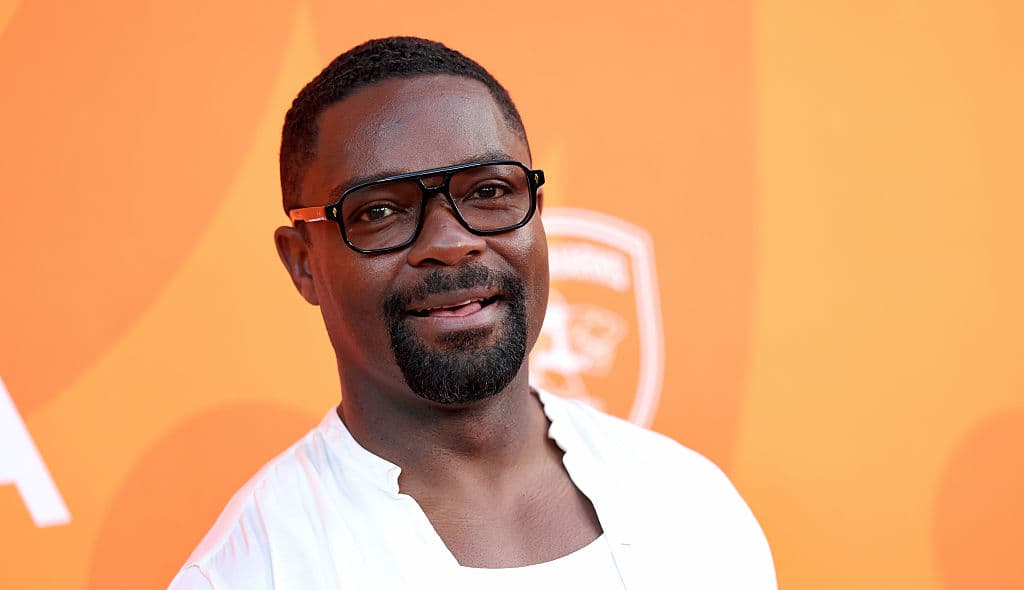
David Oyelowo’s response to Druski’s viral Black British actors skit is still making the rounds on social media. But now, the conversation has taken a sharper turn.
What started as a debate about whether Black British actors are taking roles from African American actors has become a much deeper conversation about Black American language, Southern identity, and who gets to define what “authentic” Blackness sounds like.
Oyelowo recently addressed Druski’s skit during an appearance on the One54 Africa podcast, saying he thought the sketch was funny but not necessarily helpful. The Nigerian-British actor, who famously portrayed Dr. Martin Luther King Jr. in Ava DuVernay’s “Selma,” pushed back on the idea that Black British actors are somehow blocking African American actors from opportunities, saying his answer is to “continue to collaborate.”
But a separate clip from the interview, in which Oyelowo discussed Black American accents and suggested that Southern Black dialect may have developed from African speech patterns altered by slavery, sparked a far more pointed backlash.
On Threads, writer and cultural commentator Demetria L. Lucas did not mince words. “David Oyelowo is a Druski skit come to life,” she wrote, before criticizing his framing of Southern Black dialect. Lucas argued that “equating the Southern Black American dialect with subservience” says more about how Oyelowo views Black Americans in the South than it does about the actual history of the dialect.
View on Threads
She was not alone.
Media personality Bevy Smith also weighed in on Threads, calling for people to “divest” from Oyelowo’s work and saying the interview reflected a deeper lack of understanding about Black American culture. Actor Karen Pittman, Threads user Russell, and Lisa McIntosh-Green were also among those who joined the online conversation as the clip spread, and the backlash grew.
View on Threads
And that is where this story gets bigger than one actor’s comments or one comedian’s skit.
Black Southern speech is not simply a leftover from oppression. It is language shaped by survival, yes, but also by brilliance, rhythm, resistance, migration, humor, church, hip-hop, blues, storytelling, family, and region. It carries history, but it also carries invention. To reduce it to an attempt to sound submissive to white people is why so many Black Americans heard Oyelowo’s comments as not just incorrect, but insulting.
For many, the backlash is about respect.
Southern Black dialects and African American Vernacular English have long been mocked, policed, or treated as signs of lower intelligence, even as mainstream culture constantly borrows from them. Black Southern speech helped shape American music, comedy, politics, literature, and pop culture. It lives in the pulpit, the classroom, the beauty shop, the cookout, the protest chant, and the rap verse. It is not broken English. It is a language tradition.
That is why Oyelowo’s remarks landed so hard. They seemed to tap into a familiar respectability-politics wound. The idea that the closer Black people sound to whiteness or “proper” English, the more refined or intelligent they are perceived to be.
That perception is exactly what many Black American actors and viewers have been trying to explain for years.
The debate over Black British actors in Hollywood is not new. TheGrio has covered the broader conversation around Black British actors in Hollywood, including past comments from Spike Lee and Samuel L. Jackson about casting, opportunity, and the specificity of African American stories.
Most of the criticism has not been about whether Black British actors are talented. Oyelowo, Daniel Kaluuya, Cynthia Erivo, Damson Idris, John Boyega, Idris Elba, and others have delivered acclaimed performances. The issue is whether Hollywood, an industry with a long history of limiting Black American actors, sometimes treats Blackness as interchangeable while still profiting from very specific Black American stories.
Druski’s original skit turned that tension into comedy. The comedian has built a career out of hitting cultural nerves, from his megachurch parody to his “conservative white woman” skit to his history-making role as the youngest person and first content creator to host the BET Awards.
But this time, the joke opened a door to a much older argument.
Who gets to tell Black American stories? Who gets hired to embody them? Who gets mocked for how they sound? And who gets praised as “classically trained,” “polished,” or “elevated” for sounding farther removed from the people whose stories are being told?
Oyelowo has also done meaningful work to expand Black storytelling. That is part of what makes this moment complicated.
Oyelowo is not an outsider to Black storytelling. But the criticism he is facing shows how sensitive and specific this conversation is, especially when it comes to Black Americans whose language, culture, and history have often been mined by Hollywood but misunderstood by the same industry.
There is room for diaspora collaboration. There is room for Black British actors, African actors, Caribbean actors and Black American actors to work together and tell expansive stories. But collaboration cannot come at the expense of specificity.
Black American culture is not a costume. Southern Blackness is not a shorthand for ignorance or submission. And dialect is not something to be “overcome” to be taken seriously.
If Druski’s skit made people laugh, Oyelowo’s comments made people pause. The backlash shows that for many Black Americans, especially those from the South, this is not just about accents.
It is about dignity.
