
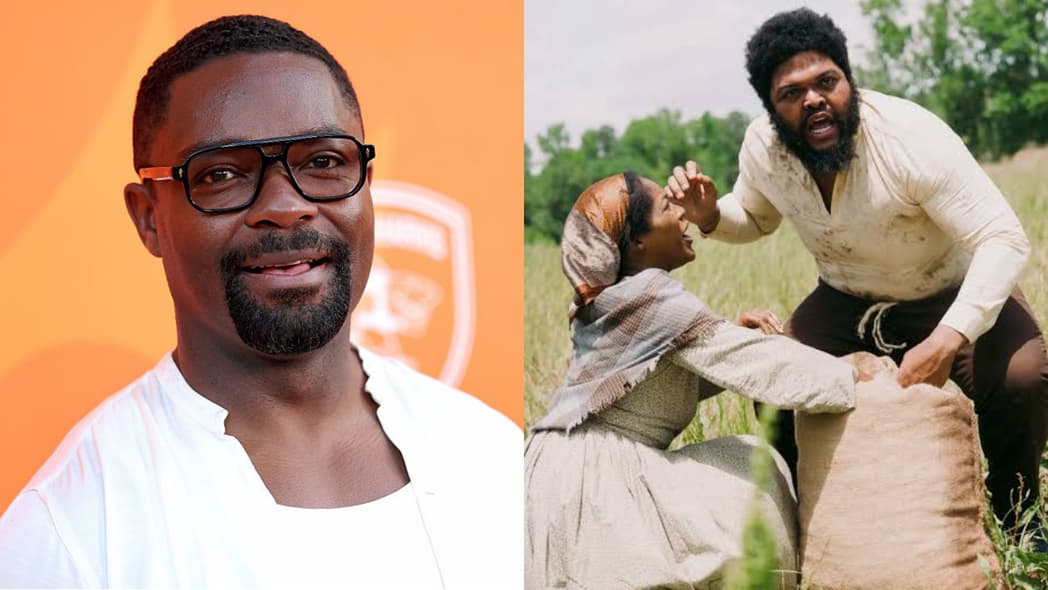
Druski may have had the internet cracking up, but David Oyelowo wants folks to think a little deeper about the punchline.
In a recent interview with One54 Africa, the Nigerian-British actor responded to Druski’s viral skit poking fun at the long-running debate over Black British actors landing major roles in Hollywood, especially roles tied to African American history and culture.
Oyelowo said he understood the humor in the sketch, but he also questioned whether jokes like that actually move the conversation forward.
“I think it’s funny, that skit. Do I think it’s helpful? I don’t,” Oyelowo said during the interview. “But my answer is to continue to collaborate.”
That answer says a lot.
For years, Black audiences, actors, and filmmakers have gone back and forth over whether Hollywood’s embrace of Black British actors comes at the expense of African American performers. The conversation has centered on everyone from Daniel Kaluuya and Cynthia Erivo to Idris Elba, John Boyega, and Oyelowo himself, who famously portrayed Dr. Martin Luther King Jr. in Ava DuVernay’s “Selma.”
And let’s be honest: the debate didn’t come out of nowhere.
For Black American actors who have historically been boxed out of prestige roles, award-season campaigns, and major studio opportunities, it can sting to watch Hollywood suddenly “discover” Blackness through a British accent, especially when many African American performers are still fighting to play fully realized characters beyond struggle, sidekick, trauma, or comic relief.
But Oyelowo’s point seems to be that the real issue is not Black British actors versus Black American actors. The bigger question is why Hollywood still makes so few substantial roles for Black people in the first place.
That’s where the conversation gets bigger than the skit.
Druski, who has built a career out of turning uncomfortable cultural truths into viral comedy, has been on quite a run. TheGrio has previously covered how his megachurch parody sparked a larger debate about the modern Black church, how Lecrae defended the skit as “recognition” rather than offense, and how Pastor Michael Todd later addressed fans who believed he inspired the sketch. TheGrio has also covered Druski’s “conservative white woman” skit, the political backlash around it, and his history-making turn as the youngest person and first content creator to host the BET Awards.
In other words, Druski knows how to hit a nerve.
This time, the nerve is diaspora, identity and who gets to tell which Black stories.
For Oyelowo, that conversation is personal and professional. The actor has long pushed for a broader understanding of Black storytelling, not just through his performances, but through his producing work. TheGrio previously reported on his partnership with Roku to launch Mansa Mix, a free streaming channel designed to amplify Black stories worldwide. The channel grew out of Mansa, the streaming platform Oyelowo co-founded to expand the scope of Black culture and give global Black stories more room to breathe.
He has also been intentional about bringing overlooked Black history to the screen. In an exclusive interview with theGrio, Oyelowo discussed his years-long commitment to telling the story of Bass Reeves in “Lawmen: Bass Reeves,” calling the role an “absolute obsession” and explaining why it mattered that another generation not grow up without knowing about the first Black deputy U.S. marshal west of the Mississippi.
That context matters because Oyelowo is not simply defending Black British actors getting booked. He is making a case for Black stories traveling across borders without becoming a battle over who is “Black enough” to tell them.
