
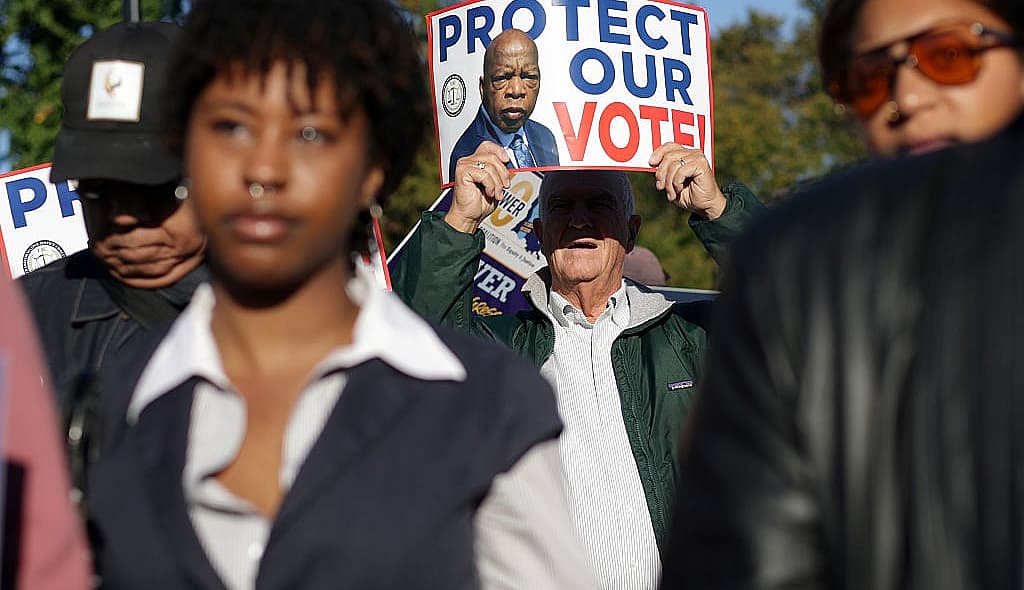
Some Southern Black Democrats say they see a familiar pattern emerging as national party leaders debate how to respond to sweeping Republican-led redistricting efforts across the South.
At the center of the disagreement is a difficult political question: Should Democrats prioritize protecting majority-Black congressional districts, or redraw maps to maximize the party’s chances of winning more seats overall, even if it means reducing the number of Black-majority districts?
The debate intensified after the Supreme Court’s April decision significantly narrowed the reach of Section 2 of the Voting Rights Act, making it easier for states to defend congressional maps that diminish the electoral influence of Black voters. The ruling prompted Republican-controlled legislatures across the South to begin redrawing congressional maps, placing several districts represented by Black Democrats at risk.
Now, some Democratic strategists have suggested that blue states should respond aggressively with their own redistricting efforts. In some proposals, that could mean concentrating Black voters into fewer districts to create more Democratic-leaning seats elsewhere, a strategy that has sparked concern among Black leaders who spent decades fighting to secure broader representation.
Some Southern Black Democrats argue the debate reflects a broader frustration over how the party prioritizes its resources.
Tennessee state Rep. Justin Jones told POLITICO that Democratic leaders often focus on battleground states while overlooking deeply Republican Southern states with large Black constituencies.
“Folks who lead our party go to swing states like North Carolina and Georgia, but states like Mississippi and Tennessee and Alabama and South Carolina are really neglected and are really forgotten.”
The concerns echo warnings Black lawmakers across the South have already raised following the Supreme Court’s ruling.
As theGrio previously reported, Tennessee state Rep. Justin Pearson described efforts to redraw congressional districts as “one of the most significant attacks on Black voter participation and Black voter representation since the end of Reconstruction.”
For many Black Democrats in the South, the current debate is about more than electoral math. Black voters have long been among the Democratic Party’s most reliable constituencies, helping deliver victories in local, state and national races while often arguing that their priorities receive less attention once elections are over.
The stakes are especially high because much of the South’s population growth over the last decade came from communities of color, even as several states have moved to redraw congressional maps in ways that could reduce Black political representation.
Kentucky Gov. Andy Beshear, who chairs the Democratic Governors Association, has urged fellow Democrats not to “unilaterally disarm” in the escalating redistricting battle while acknowledging that difficult trade-offs lie ahead.
As both parties prepare for another fight over congressional maps, the debate has exposed broader questions about how Democrats balance electoral strategy with protecting the Black political representation that generations of Southern voters fought to achieve.
