
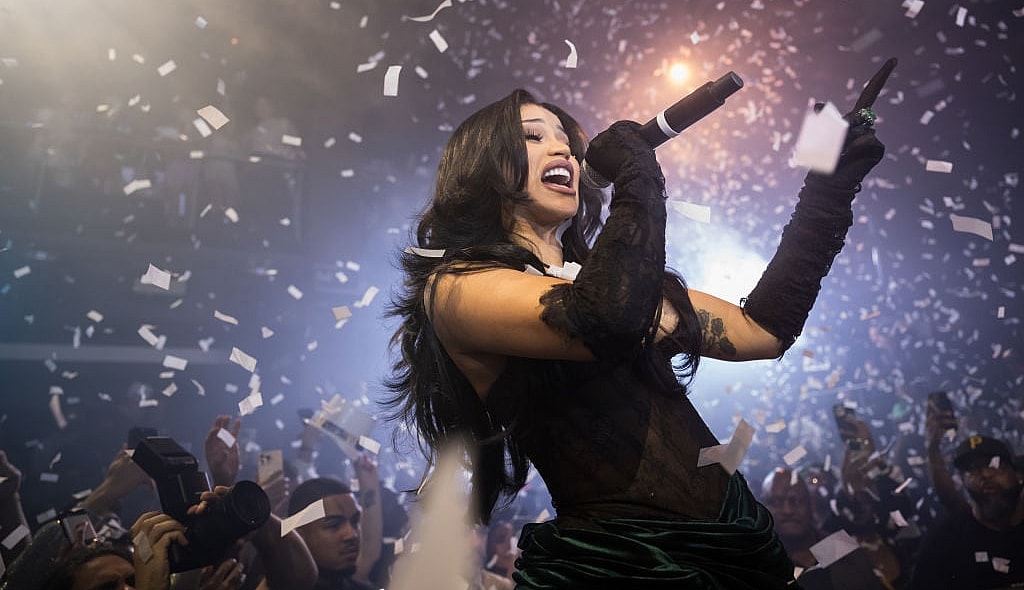
Cardi B’s courtroom winning streak continues.
Three months after a Los Angeles jury unanimously rejected claims that she scratched a security guard’s face outside a Beverly Hills doctor’s office back in 2018, the Grammy winner, born Belcalis Almánzar, walked out victorious again. On Friday (Dec. 5), Los Angeles County Judge Ian Fusselman denied plaintiff Emani Ellis’s request for a new trial, saying nothing presented by Ellis or her attorney justified overturning the verdict.
Ellis’ legal team argued that two defense witnesses were disclosed too late and should have been barred from testifying. They also leaned heavily on a moment that happened outside the courthouse on Sept. 2, just before the verdict came down, when Cardi dropped a pen on the ground in frustration after a YouTube vlogger pressed her about pregnancy rumors. In a sworn statement, the vlogger, Donat Ricketts, claimed the pen bounced and struck him, and that a juror approached afterwards to ask whether he planned to sue.
Almánzar’s team said plainly: the pen “hit no one,” and even if the juror conversation happened, it was hearsay. Judge Fusselman agreed, adding that Ellis’ own lawyer had requested a jury instruction that would have ensured jurors knew about the exchange. If anything, he said, Ellis’ camp seemed to believe it would bolster their case, not intimidate anyone.
“We’re speculating about how it impacted them,” the judge said in court. “Wouldn’t that tend to help your case, rather than hurt it?”
Ultimately, Fusselman was unmoved. He said jurors were attentive throughout the trial and rendered their decision based solely on the evidence. They deliberated for roughly an hour before concluding Ellis failed to prove the rapper assaulted her during the February 2018 confrontation, which unfolded while Cardi, who was secretly pregnant with her first child, believed Ellis was filming her outside an OB-GYN’s office.
On the stand, Cardi was clear: there was no physical contact. She said Ellis followed her down a hallway and backed her against a wall, not the other way around. She insisted that their exchange was all words, no hands.
Ellis’ attorney, Ron Rosen Janfaza, also accused Cardi of hiding the identities of the doctor and receptionist who ultimately became two of her strongest witnesses. But both Dr. David Finke and medical assistant Tierra Malcolm testified they didn’t know Cardi personally and simply responded when they heard yelling. Each described Ellis as holding a phone and appearing to be the aggressor. Malcolm further testified that Ellis later contacted her, asking her to support an employment-related claim tied to the incident—something she refused to do because “telling my truth” wouldn’t have helped Ellis.
Almánzar’s lawyers said they learned the doctor’s identity only after going office to office in the building, while Ellis—who worked security there—knew both witnesses from the start.
Judge Fusselman noted that while he permitted the defense to add Finke and Malcolm after an initial cutoff, Ellis was allowed to add two additional witnesses even later. The judge also took issue with Rosen Janfaza’s conduct, saying he repeatedly told jurors that Ellis was treated by a psychologist, despite the court having barred that witness, and no evidence ever showed such treatment had occurred. Fusselman said he plans to sanction the attorney and order him to pay related fees to Almánzar’s legal team.
For Cardi B, the decision is another notch in an already robust track record in civil court. Following the September verdict, she even dropped a limited “Courtroom Edition” cover for her album Am I the Drama?—a nod to her viral hairstyles and testimony moments. She has also previously won a $4 million defamation case against YouTuber Latasha Kebe, beat a New York libel suit involving her sister Hennessy, and prevailed in a federal case over the use of a man’s tattoo on an early mixtape cover.
Another day, another courtroom W. And another reminder that when it comes to legal battles, Cardi B rarely misses.
