
Editor’s note: The following article is an op-ed, and the views expressed are the author’s own. Read more opinions on theGrio.
When Megan Thee Stallion announced her breakup from Klay Thompson over the weekend, Black women across social media didn’t just send their condolences; they rallied. They picked up their virtual pitchforks, hit the digital streets, and wrapped the Houston Hottie in a quilt of communal love that only Black women know how to sew.
In an Instagram story and a statement to TMZ, the “Hot Girl Summer” rapper confirmed the end of the relationship, citing broken trust and infidelity. “Trust, fidelity, and respect are non-negotiable for me in a relationship, and when those values are compromised, there’s no real path forward,” she shared.
Beyond her fan base, the response was immediate and intentional. Posts and videos flooded timelines affirming her decision not to lower her standards. Messages poured in, reminding Meg that if no one else understands the specific gravity of her heartbreak, Black women do.
View on Threads
View on Threads
View on Threads
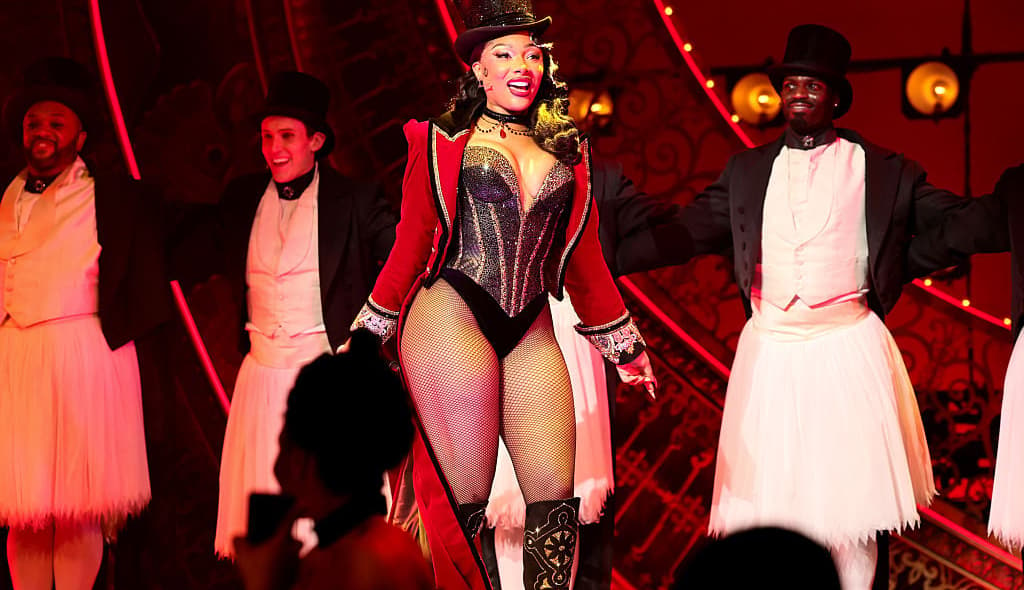
Hours after announcing the end of “Lover Girl era,” Megan took the stage for her Broadway run in “Moulin Rouge,” and after delivering a full performance, cameras caught her tearing up during a standing ovation. That image hit different because having to show up, perform, and smile through what might be your lowest moment isn’t just a celebrity experience. It’s a human experience and a Black woman’s experience. Every one of us has been there, whether it’s grief, a bad breakup, or just life deciding to test you on a Tuesday.
And just as Angel Reese wrote that she’d ride at dawn for Meg, hundreds of Black women would say the same because they’ve been watching. They watched her smile through losing her mother and grandmother in the same year. They watched her get shot by someone she considered a friend, and then watched the world mock her for it. They watched her open up about the toll it all took on her mental health through songs like “Anxiety” and her documentary “In Her Words.”
View on Threads
So when some want to reduce this moment to women being “too invested” in celebrity drama or point to it as evidence of parasocial relationships gone too far, they’re missing the point entirely. For Black women, Megan’s story has always been a mirror. It reflects the painful truth that you can do everything “right”: pick the right partner, follow every piece of relationship advice thrown at you by social media and self-proclaimed experts, and still end up betrayed. Still end up heartbroken. Still end up having to perform strength you don’t feel.
A reality, Megan talked about herself nearly 11 years ago.
View on Threads
View on Threads
Ultimately, as one Threads user eloquently stated, the collective emotional responses to the news is really a reflection of Black women grieving:
“What you’re experiencing is Black women grieving the version of themselves that believed they’d found evidence that safety and softness could coexist. For many of us, love has never just been about finding romance. So when we watch a Black woman be loved publicly after grief, betrayal, violence, and survival, we’re not watching celebrity gossip. We were watching the possibility. We’re watching proof that maybe softness doesn’t have to cost us our safety. Maybe being loved well is still available. Maybe we don’t have to keep choosing between protection and partnership.”
View on Threads
So it’s not gossip or overinvestment. This is simply Black women, once again, seeing themselves, empathizing, and giving each other the love that society fails to give us.
